
- Key Takeaways
- Why Physiology Matters When You Never Leave the Ground
- How Does Stress Affect a Drone Pilot?
- Acute Stress vs Chronic Stress
- The Stressors Drone Pilots Actually Face
- How Does Fatigue Affect a Remote Pilot?
- Acute Fatigue vs Chronic Fatigue
- The Long-Day Problem in Commercial Drone Work
- What Is Hyperventilation and How Do You Stop It?
- What Hyperventilation Feels Like
- Why Pilots Confuse Hyperventilation With Hypoxia
- When Hyperventilation Happens on a Drone Job
- Dehydration and Heatstroke on the Job Site
- Dehydration
- Heatstroke and Heat Exhaustion
- What To Do When Experiencing Dehydration or Heatstroke
- What Do the Alcohol and Medication Rules Say for Drone Pilots?
- The 8-Hour Rule Is a Floor, Not a Clearance
- How Should You Self-Assess Before Every Flight?
- Running IMSAFE on Your Crew, Not Only Yourself
- Setting Personal Minimums for Physiology
- Building the Check Into Your Preflight
- Frequently Asked Questions
- Do Drone Pilots Need a Medical Certificate?
- What Is Hyperventilation in Aviation?
- How Do You Stop Hyperventilation?
- What Are the Two Types of Fatigue?
- How Long after Drinking Can You Fly a Drone?
- Can You Fly a Drone while Taking Prescription Medication?
- Conclusion
It’s a sweltering 95°. You’re three hours into a roof inspection job, sweating like you just ran a marathon. “One more pass, please,” the client asks.
You realize you haven’t had a sip of water since the drive to the job. You’re tempted to just get it over with, but your hands feel unsteady on the controls. But one more pass isn’t worth the risk of dehydration.
As much as we want to be, we’re not invincible. Our physiology affects flight safety. That’s why the FAA’s Part 107 test includes topics like fatigue and other physiological factors affecting remote pilot performance.
In this article, learn how stress, fatigue, hyperventilation, dehydration, and substance use can impact drone pilot physiology. Even better, we’ll give you a simple self-assessment routine that can help you catch these risks before they compromise the mission.
Key Takeaways
- Stress can reduce focus and reaction time.
- Fatigue can hurt timing, concentration, and judgment.
- Hyperventilation can cause dizziness and confusion.
- Don’t fly within 8 hours of drinking alcohol or while impaired.
- Use the IM SAFE Checklist before every flight.
Why Physiology Matters When You Never Leave the Ground
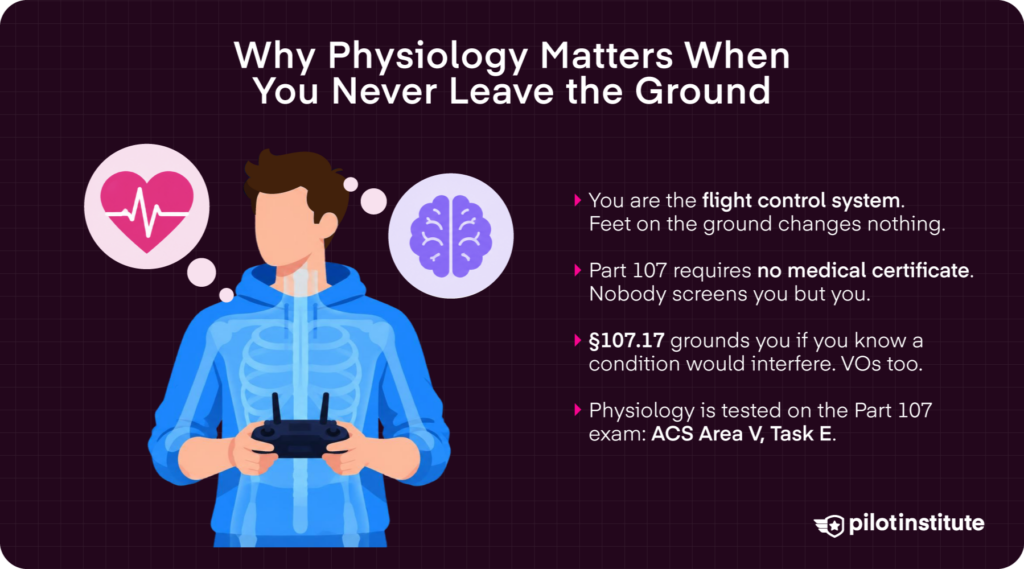
Your body is the ultimate flight control system. Anything that degrades your judgment, vision, or reaction time negatively impacts flight safety, even though you are standing with your feet planted on the ground.
14 CFR §107.17 bars anyone knowingly suffering from a physical or mental condition that would interfere with safe operation from manipulating the controls, acting as the remote pilot in command (PIC), serving as a visual observer, or participating directly in the operation.
Now, Part 107 doesn’t require a medical certificate the way manned aircraft operations do. But this places the entire burden on self-assessment, so it’s crucial to know how to recognize when your physical or mental state could compromise your ability to fly safely.
§8.1.1 of the Aeronautical Information Manual (AIM) is a great resource for understanding how physiological factors can affect remote pilot performance. It can serve as a foundation for developing a consistent preflight self-assessment.
Physiology is also a tested subject area on the Part 107 Knowledge Test under FAA-S-ACS-10B, Area V, Task E. The Small Unmanned Aircraft Systems Study Guide lists specific elements that affect remote pilot performance, including: dehydration and heatstroke, drug and alcohol use, prescription and over-the-counter medication, hyperventilation, stress and fatigue, and fitness for flight.
How Does Stress Affect a Drone Pilot?
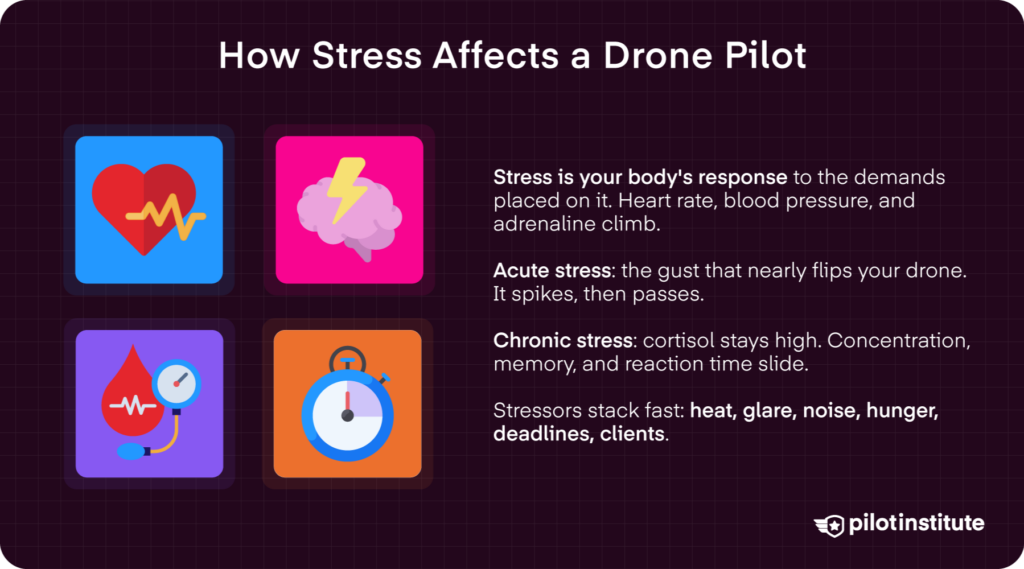
Stress can be understood as the body’s response to the “physical and psychological demands placed on it,” according to the FAA Remote Pilot sUAS Study Guide. It can negatively affect a drone pilot’s performance and create potential for unsafe operations.
There are some key signs to look out for when evaluating stress levels. From a physical perspective, heart rate, blood pressure, and hormones like adrenaline increase. The American Psychological Association (APA) claims that stress may manifest in “palpitations, sweating, dry mouth, shortness of breath, fidgeting, accelerated speech, augmentation of negative emotions, and longer duration of stress fatigue.”
Acute Stress vs Chronic Stress
Acute stress occurs in the short-term. It triggers the fight-or-flight response that increases alertness and heart rate. Most healthy people can handle brief periods of stress, with their body returning to a more restful state when the trigger passes.
Think about acute stress as the jolt of adrenaline you would feel when a strong gust of wind briefly destabilizes a sUAS. Your body goes into fight-or-flight mode, sharpening your attention to anything you would need to do to regain control. When the aircraft stabilizes itself again, your body relaxes.
However, experiencing long-term stress (chronic stress) can elevate cortisol levels in the body, keeping it in a prolonged state of fight-or-flight.
The Mayo Clinic lists cardiovascular effects, like elevated blood pressure and cardiovascular strain, and a weakened immune system. It also negatively affects the digestive system, causing chronic pain and difficulty sleeping.
Chronic stress impacts cognitive functioning, impairing concentration, memory, and reaction time. A drone pilot may experience chronic stress from regularly working long hours in extreme temperatures, without adequate rest. The pilot would likely be plagued by persistent fatigue, poor concentration, and weakened decision-making.
The Stressors Drone Pilots Actually Face
There are many stressors remote pilots face while flying. Physical stressors on a job site could include the intense noise of a construction or industrial site, glare from harsh sunlight, and extreme heat or cold temperatures.
Drone pilots may also experience physiological stress from fatigue, hunger, or dehydration.
There are also potential psychological stressors, such as demanding clients standing over your shoulder, worries about financial strain or underperformance, and tight deadlines.
Any of these stressors can affect your ability to stay focused during flight. Recognizing them before they become overwhelming is key.
How Does Fatigue Affect a Remote Pilot?
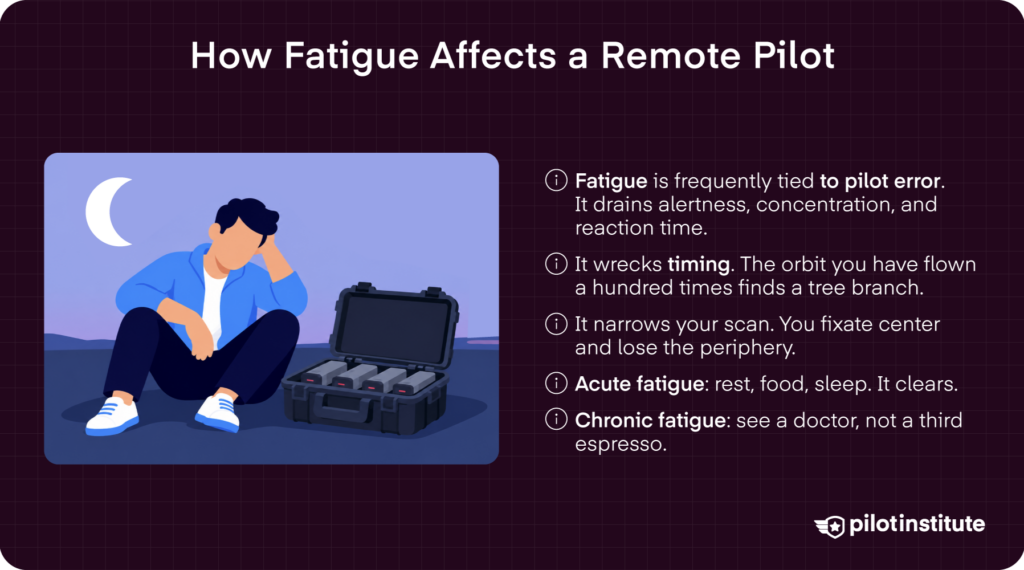
Fatigue is exhaustion, that lack of energy and weariness you feel when you’re tired. It is among the most common factors in pilot error because both physical and mental fatigue can reduce alertness, concentration, reaction time, and decision-making skills.
Being fatigued can disrupt your timing. Essentially, when you perform a task when fatigued, your timing is off. A fatigued drone pilot may misjudge when to adjust the sticks, reacting just a moment too late to a sudden change in the aircraft’s positioning. That orbit move you practiced a hundred times could land you straight into a tree branch if your timing’s off.
Fatigue can also encourage omissions, where you skip steps in a sequence you know well. When you’re exhausted, you may skip important steps, even though you’ve done them hundreds of times. This is especially dangerous in preflighting and situational awareness before even taking off.
Acute Fatigue vs Chronic Fatigue
Acute fatigue stems from a short-term lack of sleep, physical exertion, heat, or a long day on site. The fix is typically rest, food, and water. So, if your fatigue stems from standing in that 95° without having had water, the flight can wait an hour until the temperature drops, and you get properly hydrated.
Now, chronic fatigue doesn’t come with such an easy fix. Long-term experience of fatigue often exposes more serious underlying causes, like chronic stress or sleep disorders, that can impact a drone pilot’s performance by impairing concentration, reducing reaction time, and situational awareness.
Chronic fatigue is a situation that requires checking in with your doctor, not adding a third shot of espresso for a quick boost.
The Long-Day Problem in Commercial Drone Work
Drone pilots work hard. We face the most fatigue after we’ve been at it for a while. After numerous battery swaps, repeat passes, and client demands, even the most experienced sUAS pilot can start to feel mentally and physically drained.
According to a Frontiers in Physiology article on the dangers of fatigue in aviation, “high workload situations” lead to “more stress and may impair sleep after work.” This churns a vicious cycle where fatigue and stress build on one another, compounding negative effects on cognition and performance.
To prevent fatigue, respect hard stop times and scheduled water or shade breaks. Don’t skip needed opportunities to rest and refresh.
And, a word to the wise: speak your post-flight checklist out loud. After all your hard work flying, hearing yourself confirm each step can help prevent omitting small details.
What Is Hyperventilation and How Do You Stop It?
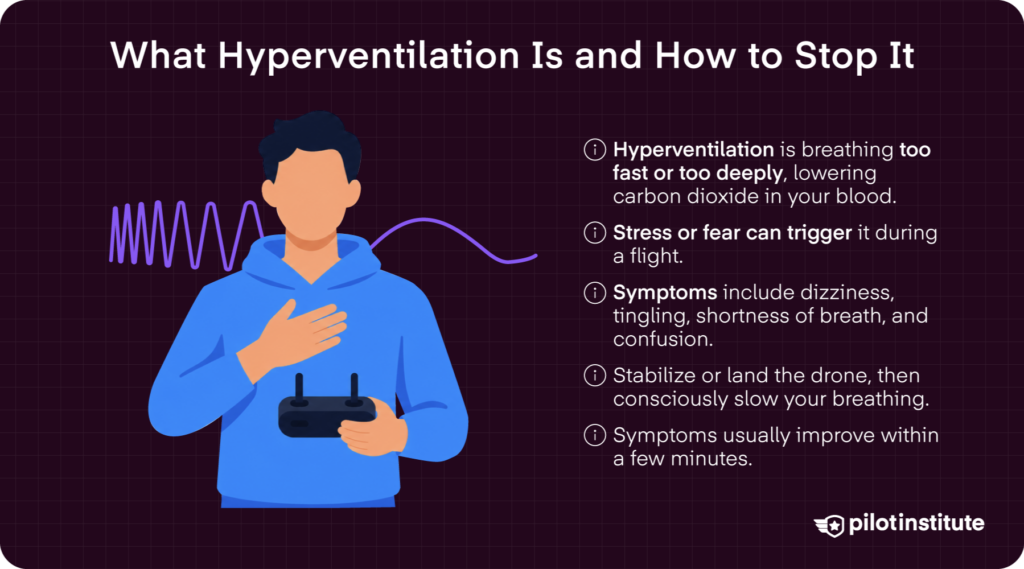
The FAA’s Pilot Handbook of Aeronautical Knowledge (PHAK) defines hyperventilation as “the excessive rate and depth of respiration leading to abnormal loss of carbon dioxide from the blood.” In layman’s terms, that means you’re breathing too quickly or deeply, so much so that your body loses more carbon dioxide than it should.
Hyperventilation can be triggered by emotional stress, fright, anxiety, or pain. After just avoiding a collision, the sudden surge of fear and adrenaline may cause your breathing to become rapid and deep.
To stop it, slow your breathing rate. The FAA also lists talking aloud and breathing into a paper bag, and these are the answers the Part 107 test expects. Slowing the breathing rate is the primary remedy, and anyone unsure whether they are hyperventilating or experiencing something else should stop operations and seek medical help rather than rebreathe into a bag.
What Hyperventilation Feels Like
When you hyperventilate, it feels like you can’t catch your breath. You may feel dizziness, lightheadedness, tingling in your extremities, tightness in the chest, or confusion. It can be difficult to think clearly.
Hyperventilating in and of itself can be scary. The symptoms can cause increased stress and alarm, which may work to exacerbate the problem by continuing to speed up breathing rates.
Why Pilots Confuse Hyperventilation With Hypoxia
What is the difference between hyperventilation vs hypoxia? After all, many symptoms overlap, like dizziness, confusion, fatigue, and impaired coordination.
According to §8.1.2(a) of the AIM, hypoxia “is a state of oxygen deficiency in the body sufficient to impair functions of the brain and other organs.” Pilots of manned aircraft risk hypoxia when flying at high altitudes. Since drone pilots keep their feet on the ground, they have much less risk of hypoxia.
Yet, hyperventilation can occur at any altitude. It is a risk for drone pilots thanks to things like stress that can rapidly increase breathing to disrupt the balance of oxygen and carbon dioxide in the bloodstream.
When Hyperventilation Happens on a Drone Job
Hyperventilation can hit when something unexpected happens. A flyaway, lost-link event, or a near-miss with an obstacle can trigger a rush of panic.
If you feel yourself starting to hyperventilate, prioritize the aircraft first. Stabilize it in a hover or begin a controlled return using the RTH function if safely possible. Then, slow your breathing and give yourself a moment to recover.
Dehydration and Heatstroke on the Job Site
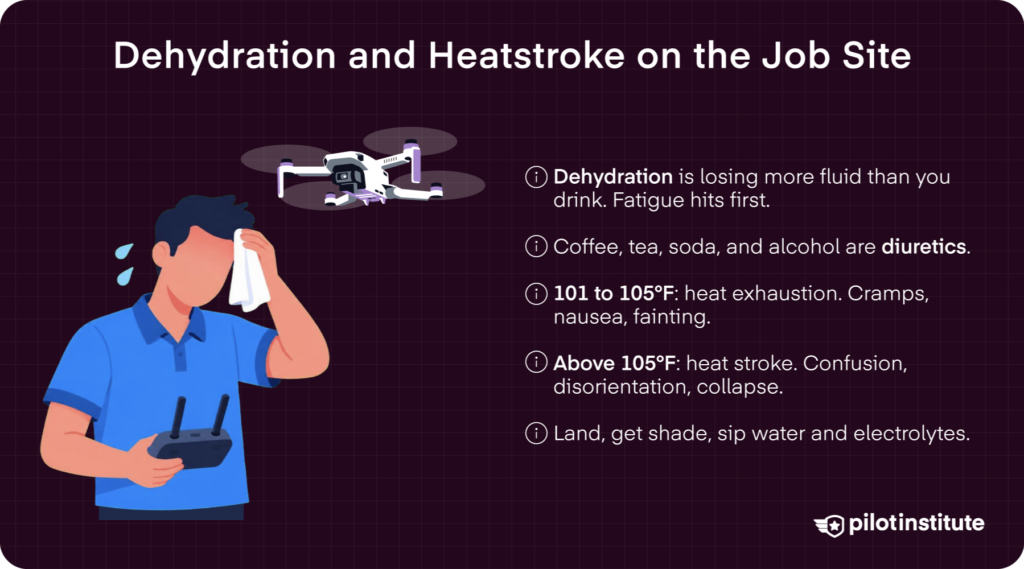
Drone pilots face risks of dehydration and heatstroke because they work outside, often standing for long periods in direct sunlight.
Dehydration
Dehydration occurs when you are losing more fluids than you are drinking. This critical loss of water from the body feeds into other concerns like fatigue. The FAA lists causes like hot environments (flight decks or concrete areas), wind, humidity, and common diuretic drinks (coffee, tea, alcohol, and some caffeinated soft drinks).
Common signs of dehydration include headache, fatigue, cramps, sleepiness, and dizziness.
Prevention is pretty standard: drink enough water. The FAA recommends following the National Academy of Sciences, Engineering, and Medicine’s advice: men should “consume 125 ounces (3.7 liters) of fluids per day,” while women should “consume 91 ounces (2.7 liters).”
Heatstroke and Heat Exhaustion
Heatstroke is when the body can no longer regulate its own temperature. When the body’s temperature rises above 105° F, our body’s mechanism to control heat stops working. At this temperature, symptoms include mental confusion, disorientation, and loss of consciousness.
Even between 101° and 105° F, you can experience heat exhaustion. Here, you may feel fatigue, nausea/vomiting, cramping, hyperventilation, and fainting.
Early signs of heat exhaustion and heatstroke often resemble dehydration, including headache, fatigue, cramps, sleepiness, and dizziness.
What To Do When Experiencing Dehydration or Heatstroke
If you start to experience either dehydration or heatstroke, land the aircraft as soon as practical. Move to the shade to cool down and take some time to rest. Drink water gradually, and throw in a drink high in electrolytes.
If dizziness, weakness, or impaired coordination persist, end your day. Seek immediate medical attention for severe symptoms, especially loss of consciousness or confusion.
What Do the Alcohol and Medication Rules Say for Drone Pilots?
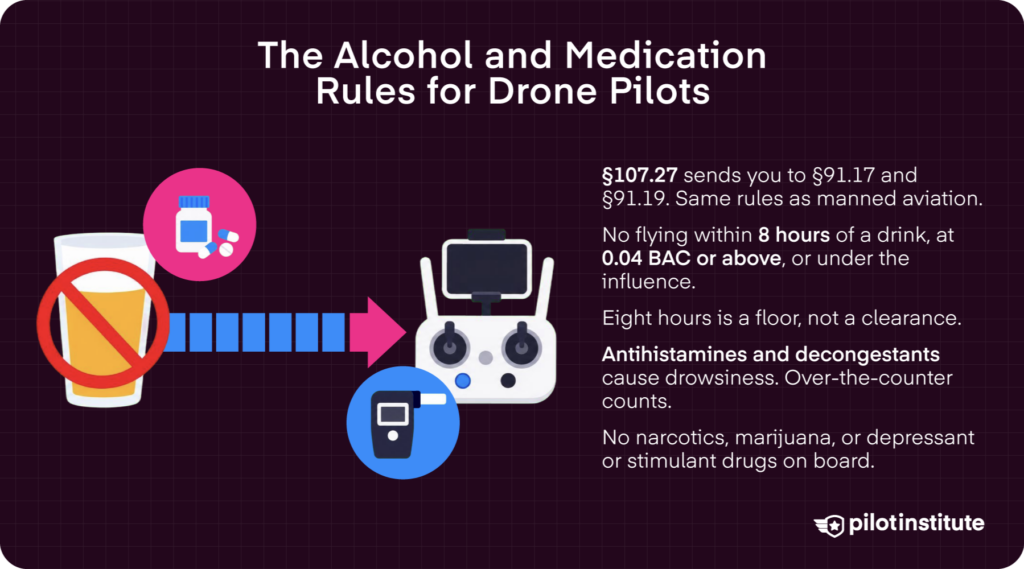
14 CFR § 107.27 requires anyone manipulating the flight controls, the remote pilot in command, and the visual observer to comply with §91.17 and §91.19. That means you cannot fly an sUAS within eight hours of consuming an alcoholic beverage, are under the influence of alcohol, are using a drug that “affects the person’s faculties in any way contrary to safety,” or have an alcohol concentration of 0.04 or greater in a blood or breath test.
That means there’s no flying within 8 hours of consuming any alcoholic beverage, no flying while under the influence of alcohol or drugs that compromise your faculties.
Now, this includes over-the-counter or prescription medication that still undermines judgment and reaction time. Remember, common antihistamines and decongestants can cause drowsiness. Rather than guessing if your medication may be included here, check out the FAA’s Over-the-Counter Medications Reference Guide.
Drone pilots also cannot carry narcotic drugs, marijuana, or other illegal substances in the aircraft.
The 8-Hour Rule Is a Floor, Not a Clearance
Just because it’s been eight hours since your last alcoholic drink does not automatically make you fit to fly. If you are still impaired at hour nine, you’re still grounded.
How Should You Self-Assess Before Every Flight?
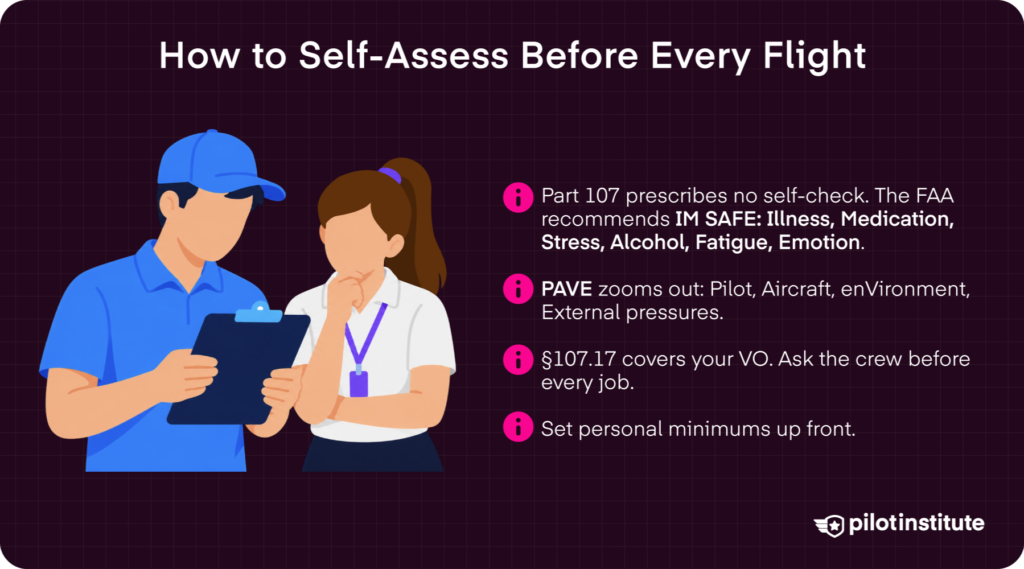
Part 107 does not prescribe a self-check, but the FAA recommends the IM SAFE Checklist. It covers all the basics: Illness, Medication, Stress, Alcohol, Fatigue, and Emotion.
The checklist takes about 30 seconds to go through and can really help you catch physical or psychological factors that could compromise your safe flying.
There is also the PAVE Checklist, which stands for Pilot, Aircraft, Environment, and External Pressures. It provides a broader look at the risks surrounding flight operations, helping you recognize potentially overlooked hazards.
Running IMSAFE on Your Crew, Not Only Yourself
Remember, §107.17 includes visual observers and anyone manipulating the controls. Therefore, you, as the remote PIC, need to assess the crew as well.
Ask a simple one-liner that doesn’t feel like an interrogation, like “Everyone feeling good? Fit and ready to fly today?”
Setting Personal Minimums for Physiology
Set personal minimum limits beforehand. For example, decide in advance how many hours to fly that day, given the weather and environmental conditions.
What hard temperature ceiling are you comfortable with? 100° F, for example, is where many pilots tap out.
Building the Check Into Your Preflight
Make self-assessment part of your existing routine. Attach the IM SAFE Checklist to your preflight inspection checklist and make it easy to incorporate before every flight.
Frequently Asked Questions
Do Drone Pilots Need a Medical Certificate?
No, a medical certificate is not required under Part 107. But §107.17 still bars flying with a disqualifying condition.
What Is Hyperventilation in Aviation?
An excessive rate and depth of breathing cause hyperventilation. This causes an abnormal loss of carbon dioxide in the blood, which is often triggered by stress or fright.
How Do You Stop Hyperventilation?
Slow your breathing rate as best you can is the best remedy. The FAA lists talking out loud and breathing into a paper bag, but anyone who thinks they are experiencing hyperventilation or something else should stop operations and seek medical attention.
What Are the Two Types of Fatigue?
Acute fatigue is short-term exhaustion caused by things like sleep loss, prolonged physical or mental effort, or heat.
Chronic fatigue is more persistent, long-term exhaustion that is often caused by long-term stress, sleep problems, or other underlying conditions that can greatly impair concentration.
Rest fixes acute fatigue, but not chronic fatigue.
How Long after Drinking Can You Fly a Drone?
You need to satisfy all of the FAA’s conditions, not just one. Wait at least 8 hours after your last drink, be below a 0.04 blood alcohol concentration, and be free of any impairment. If you are still feeling the effects at hour nine, you are still grounded.
Can You Fly a Drone while Taking Prescription Medication?
It depends on the type of medication and its effects. Basically, you cannot fly a drone when taking any medication that may impair your alertness, judgment, coordination, reaction time, or ability to safely operate the aircraft. Check the FAA’s Over-the-Counter Medications Reference Guide.
Conclusion
So, the roof can wait. If you’re dehydrated and running on empty in 95° heat, one more pass is not worth turning a routine job into an emergency.
Know your limits and take 30 seconds to conduct the IM SAFE Checklist. It’s the cheapest safety equipment you own.