
-
Key Takeaways
-
Quick Look
-
Most Expensive Drones in 2026 By Category
- Agriculture
- Mapping/ Inspection
- Film/ Cinema
- Industrial/ Payload/ Delivery
- Public Safety/Surveillance
- American-Made Options
-
Why Are These Drones So Expensive?
- Cutting-Edge Technology and Features
- Specialized Applications
- Premium Build Quality
-
Factors to Consider Before Purchasing an Expensive Drone
- Specific Purpose and Requirements
- Evaluating Professional vs. Personal Use
- Assessing Return on Investment (ROI)
- Maintenance and Operational Costs
- Legal and Regulatory Compliance
-
Conclusion
Can you believe that some high-end drones rival the cost of luxury cars? Swift Autonomy’s Swift Crane, for example, is about the same as a new Bentley Bentayga these days!
In a market flooded with drones ranging from affordable to exorbitantly priced, it’s essential to understand what you’re paying for.
Let’s take a look at some of the most expensive drones available today, why they are so expensive, and whether they are worth the price.
Key Takeaways
- Review the top-priced drones in the agricultural, mapping/ inspection, film, industrial/ delivery, and public safety/ surveillance industries.
- Want to stick with American-made options? Check out the drones made in the U.S.
- Understand what specs contribute to a drone’s cost to determine if the investment is worthwhile.
- Expensive drones only make sense if they increase your earning potential.

Become an FAA-Certified Drone Pilot
Preview the course and see why 99%+ pass on the first try. You’ll get…
- Test-fee + course refund if you don’t pass.
- Live support & weekly office hours.
- Practice tests that mirror the real exam.
- And More!
Quick Look
| Drone Model | Price | Use Case |
| Swift Autonomy Crane | $220,000 | Public Safety/ Surveillance |
| Idea Forge Switch UAV | $113,260 | Public Safety/ Surveillance |
| Advanced Aircraft Company HAMR | $120,000 | Mapping/ Inspection, Public Safety/ Surveillance |
| Flyability Elios 3 | $76,000 | Mapping/ Inspection |
| Aerostar Pro | $38,500 | Agriculture |
| Freefly Alta X Gen 2 | $39,500 | Industrial/ Payload/ Delivery, Film/ Cinema |
| Freefly Astro Max (NDAA/ Blue) | $28,995 | Industrial/ Payload/ Delivery |
| Freefly Systems Alta X | $20,650 | Mapping/ Inspection |
| DJI Flycart 30 | $20,889 | Industrial/ Payload/ Delivery |
| Event 38 E400 Mapper | $20,900 | Mapping/ Inspection |
| DJI Agras T100 | $17,999 | Agriculture |
| Parrot ANAFI USA | $14,000 | Mapping/ Inspection |
| DJI Inspire 3 | $11,810 | Film/ Cinema |
| DJI Matrice 400 | $10,450 | Mapping/ Inspection |
Note: Keep in mind, these prices are only at the time of publishing this article and are subject to change. Always check directly with the manufacturer for the most up-to-date pricing.
Most Expensive Drones in 2026 By Category
Let’s split up this list by category to make it more digestible. We are including drone models available to the public in the top industry categories for easy review.
While we have a Public Safety/ Surveillance category, we left out models associated with more military operations to keep things simple and accessible.
We verified all drone prices as of January 2026 to ensure accuracy.
Agriculture
Aerostar Dynamics Aerostar Pro: $38,500
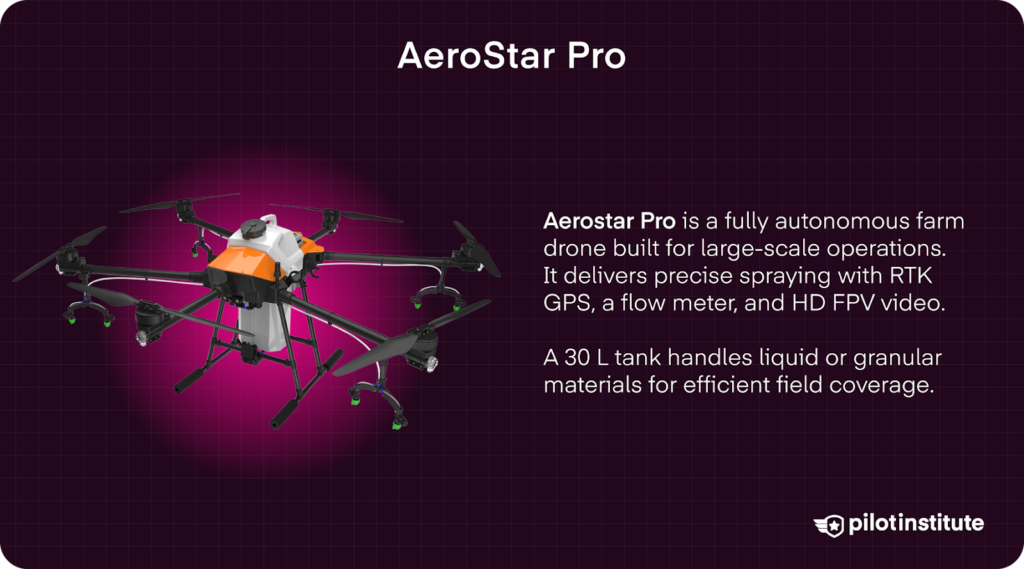
The Aerostar Pro by Aerostar Dynamics is a fully autonomous drone designed for large-scale farm operations. It combines autonomous flight planning with consistent spray application to reduce waste, improve crop health, and increase overall operational efficiency.
With the Aerostar Pro, enjoy enhanced accuracy thanks to a precision flow meter, RTK-enabled GPS, and an FPV-style HD video feed. It has a 30 L tank for efficient field coverage and can carry both liquid and granular materials.
Typically priced around $40,000.
DJI Agras T100: $17,999
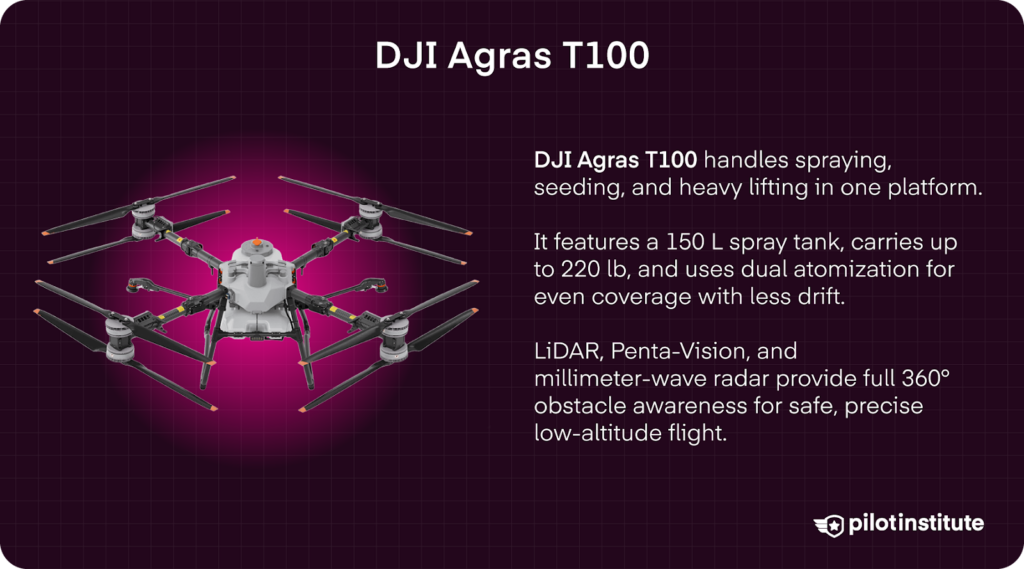
DJI’s top agricultural drone is the Agras T100, coming in at just under $18,000.
The T100 is beautifully multifunctional, capable of spraying, seeding, and even lifting heavy payloads. Not only does it have a 150 L spray tank, but it can also carry up to 220 lb (100 kg). It even has a dual atomization centrifugal sprinkler that optimizes droplet size and distribution, ensuring uniform coverage while minimizing drift and overspray.
It is outfitted with LiDAR, DJI’s Penta-Vision System, and a millimeter-wave radar for optimal obstacle avoidance. These systems work together to provide 360-degree situational awareness, enabling safer low-altitude flight and precise operations in any environment.
Mapping/ Inspection
Flyability Elios 3: $50,000 – $76,000
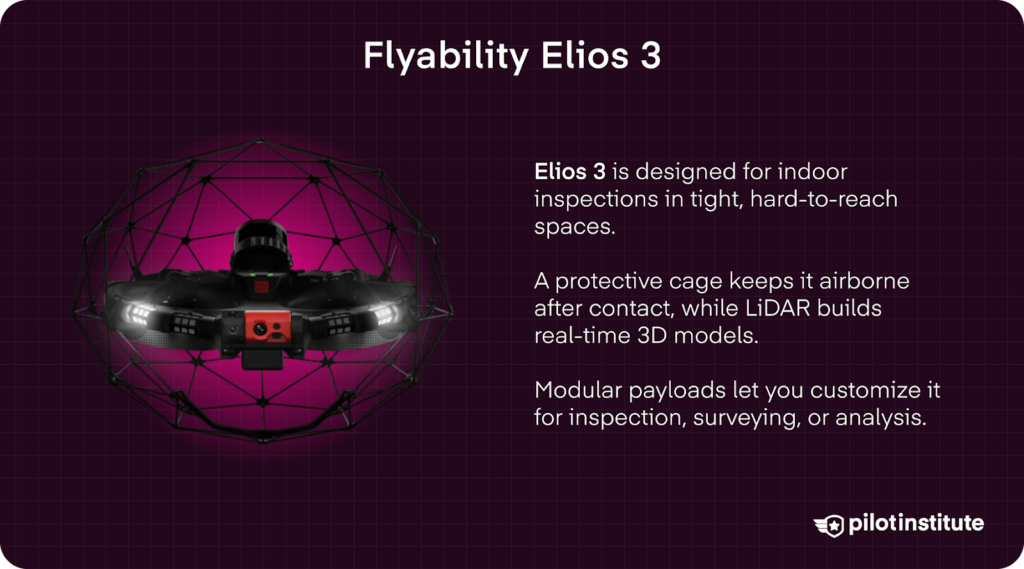
The Elios 3 is specifically tailored for indoor inspection needs. It really gets into all those otherwise inaccessible nooks and crannies in indoor industrial environments. The drone has a protective cage that helps keep it in the air after a few bumps.
It uses advanced LiDAR sensing to create 3D models in real time. Flyability chose a modular design, featuring additional RAD, UT, and Surveying Payload options. This gives you the freedom to build a tailored drone suited to your needs.
Price varies depending on the purchased package, typically between $50,000 to $76,000. The most popular is the Elios 3 Light Package, which features spare parts, a LiDAR payload, inspection software, and more. The more advanced RAD payload model comes in at around $76,000.
Event 38 Unmanned Systems E400 Mapper: $18,900 – $20,900
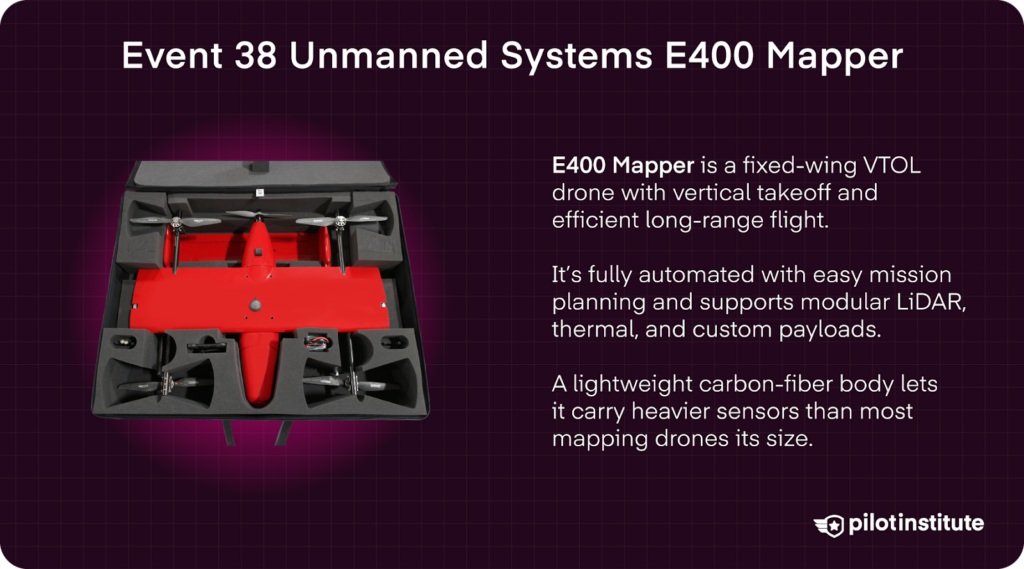
The E400 Mapper is a fixed-wing VTOL drone that is still capable of vertical takeoff, thanks to its incredibly innovative use of propellers. The drone is fully automated, featuring intuitive ground control software that allows you to easily preplan missions.
It has a modular design that offers LiDAR systems and other custom payloads. You can add specialized cameras for thermal imaging or crop analysis. This allows operators greater flexibility in the technology they use.
The drone body is made of super-light carbon fiber composite, enabling the E400 to handle payloads up to 3 lb (1.3 kg), much more than comparable mapping drones of its size.
Event 38 has two configurations of the E400 Mapper. The lowest price comes in a bundle that includes the drone, ground station, one battery, a standard GPS receiver, and a carrying case for $18,900. A second bundle for $20,900 upgrades to a PPK GPS receiver.
DJI Matrice 400: $10,450
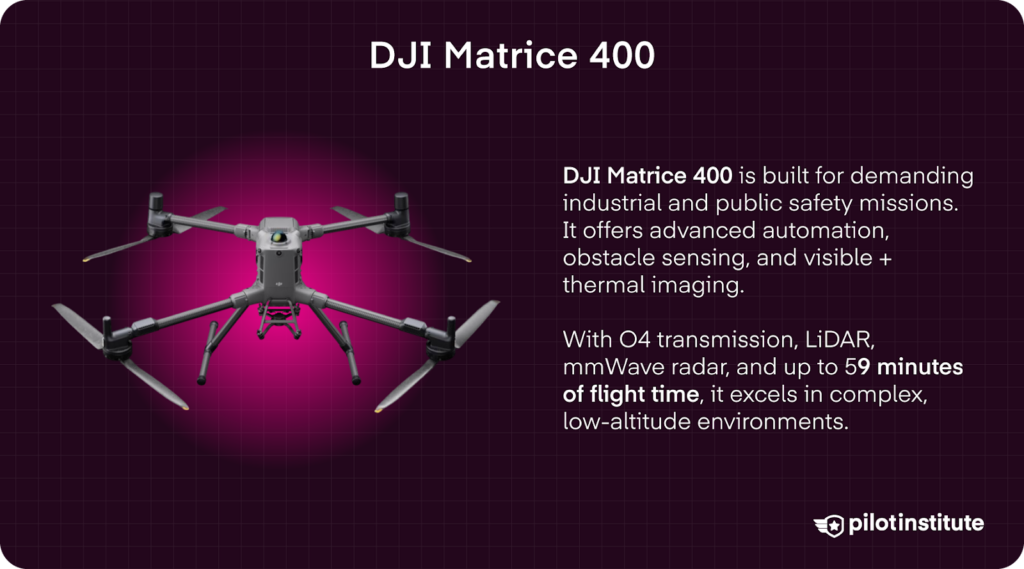
DJI’s Matrice 400 is one of the top performers of the Matrice line, building on its predecessors with enhanced endurance, expanded payload capability, and upgraded autonomy for demanding operations.
It features advanced automation, robust obstacle sensing, visible and thermal imaging, and enterprise-grade redundancy. As such, it is well-suited for complex industrial inspection and even public safety missions.
The drone boasts impressive video transmission, thanks to DJI’s O4 Air Unit. It also has integrated LiDAR and mmWave radar, perfect for power-line inspection and obstacle avoidance at crowded low altitudes.
It can carry up to 13 lb (6 kg) and has a hefty 59 minutes of flight time at 55 mph (25 m/s). Check out our full DJI Matrice 400 Deep Dive for more exciting features and how you can maximize your investment.
At only $10,450, it is one of the most affordable drones on this list!
Film/ Cinema
DJI Inspire 3: $11,810
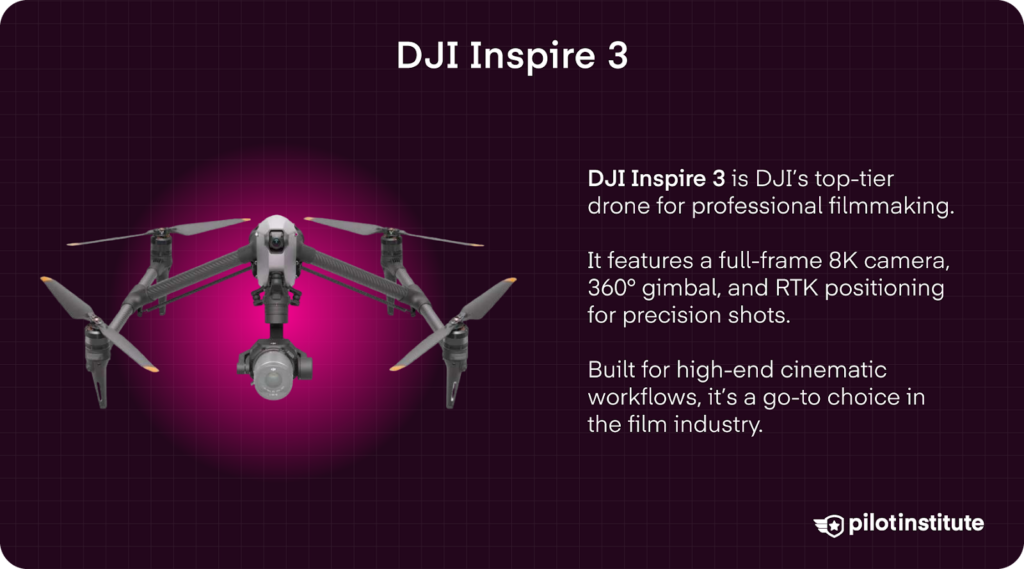
If you’re after the most high-end DJI drone for professional photography, the DJI Inspire 3 is it. This model has a full-frame 8K camera on a 360° gimbal, shoots in professional RAW and DNG formats with dynamic range. RTK positioning ensures precise location tracking.
Building on the legacy of earlier Inspire models that are already widely used in Hollywood, the Inspire 3 raises the bar. It’s built for high-budget filmmaking and offers a smooth, flexible workflow for serious professionals.
It’s ideal for those who want cutting-edge DJI tech and are ready to invest. Powerful, precise, and widely used in the film industry, the Inspire 3 is one of the top choices for cinematic drone work today.
The official DJI store has it currently listed at $11,810.
Industrial/ Payload/ Delivery
Freefly Alta X Gen 2: $39,650
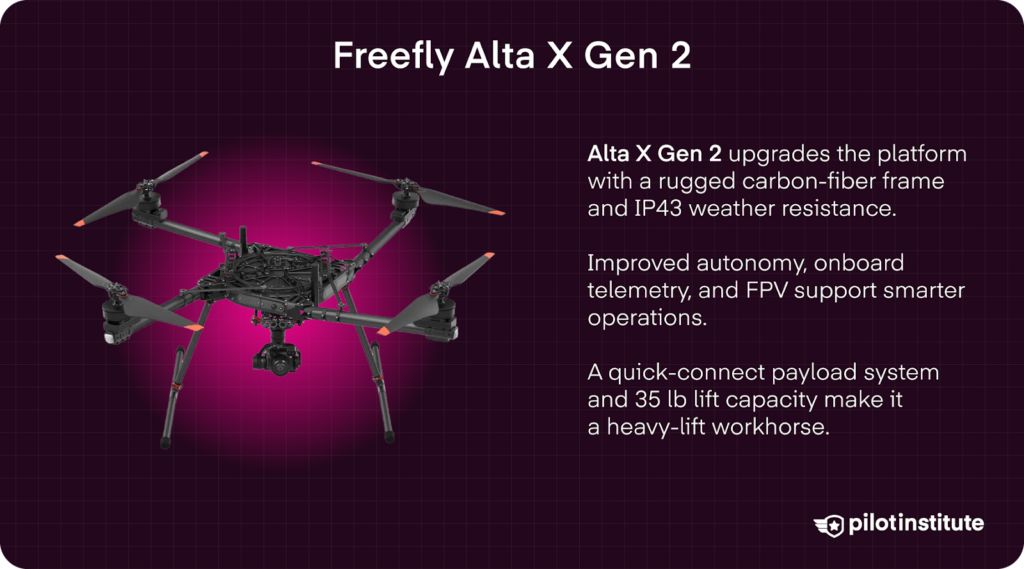
Building on the Alta X, the Alta X Gen 2 features a rugged carbon-fiber frame with an IP 43 weather resistance rating.
Some of the Gen2’s key improvements are in autonomy and automation. It also offers integrated telemetry tools for reliable data on the go. Watch where you’re flying with a solid FPV camera.
The Alta X Gen2 uses a dovetail quick-connect payload system that integrates with both Freefly and third-party payload options using a 12mm rail mount attachment.
Still, the drone is a lifting beast, capable of carrying up to 35 lb (15.88 kg).
The Alta X Gen 2 is accepting preorders on Freefly’s site for $39,650, with the NDAA-approved model for a bit more at $45,650. Shipping is expected around March 2026, so make sure to get your order in soon!
DJI Flycart 30: $20,889
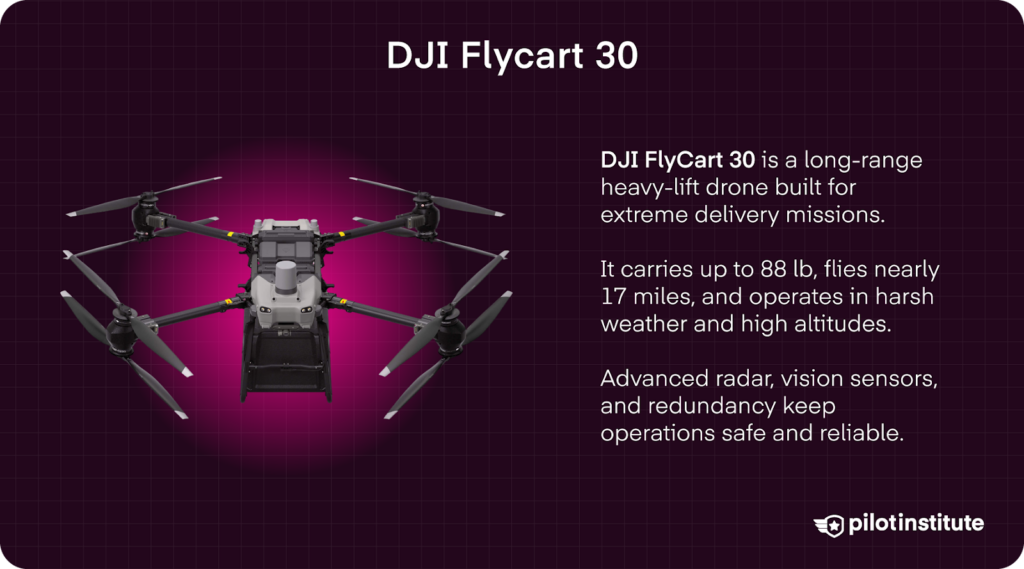
The DJI Flycart 30 is an impressive heavy-lifting drone that also has an incredible range. It can carry up to 66 lb (30 kg) with dual batteries and 88 lb (40 kg) with a single battery. Even with a full payload, the drone has a range of 9.95 miles (16 km). Without carrying anything, that range extends to 17.3 miles (28 km).
This is a drone built for serious extremes. It has a 6,000m maximum flight altitude and can operate in temperatures from -4º F (-20º C) to 113º F (45º C). The Flycart 30 has an IP rating of 55, offering intense weather and dust resistance.
It uses Intelligent Obstacle Sensing. Front and rear phased array radar and a dual Binocular Vision system ensure optimal safety in the field, even in crowded environments. Multilevel redundancy enhances flight safety even more.
At $20,889, this is a lot of bang for your buck!
Public Safety/Surveillance
Swift Autonomy Crane: $220,000
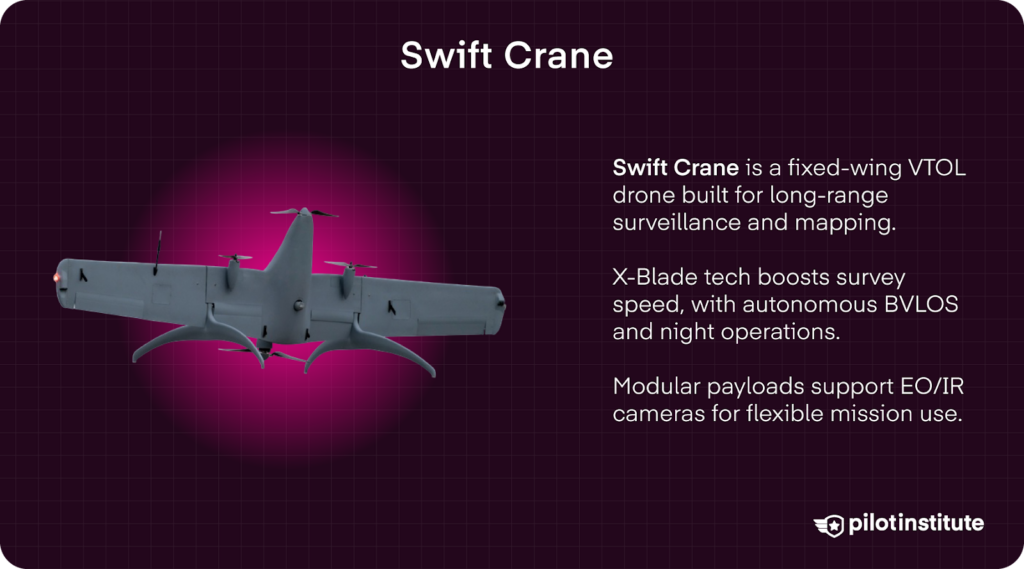
At the highest priced drone on this list, Swift Autonomy’s Swift Crane is a notable surveillance fixed-wing VTOL UAS. Using its X-Blade technology, Swift claims that it increases surveying speed by up to 80%, with a range of around 15.5 miles (25 km).
It is a fully autonomous UAS, capable of BVLOS and nighttime operations. Yet, radio control can be switched on when needed for extra control and safety.
The drone can be customized with different payload options, thanks to its modular design. Payloads of up to 2.5 lb can be easily switched out. Swift offers payloads like the NightHawk 2 EO/IR stabilizing camera for mapping and surveillance.
The $220,000 price tag is steep, basically the cost of that brand new Bentley Bentayga V8. Yet, there is added value with auxiliary equipment, including a ground control station and an antenna.
Idea Forge Switch UAV: $113,260
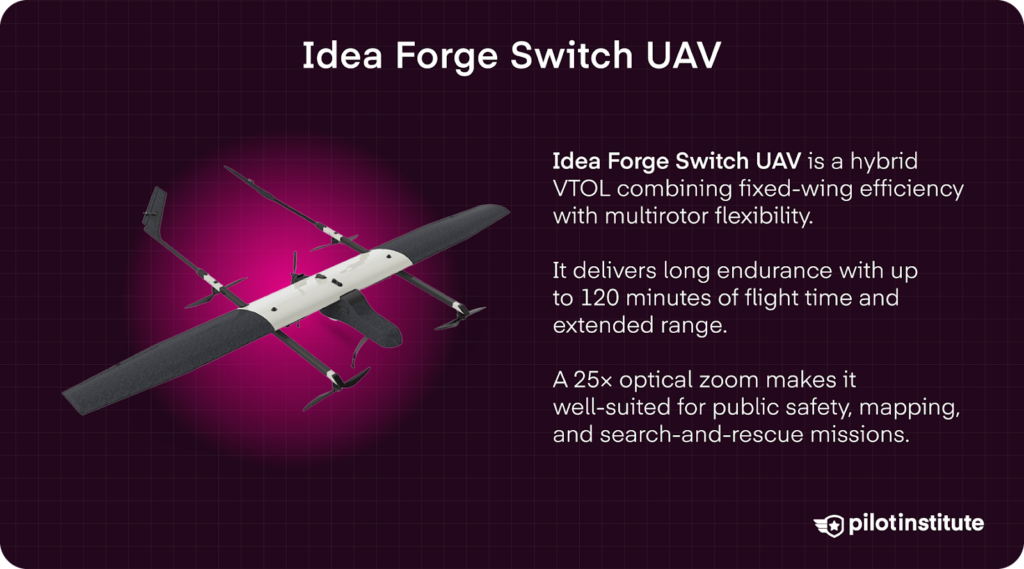
Idea Forge’s Switch UAV is a hybrid VTOL, using both a fixed wing and multi-rotor design for maximum flexibility in takeoff and flight operations. Its range is around 10 miles and a powerful flight time of 120 minutes.
The Switch UAV is an excellent option for public safety operations, including search and rescue, wildfire monitoring, and mapping. Its 25x optical zoom allows for impressive surveillance, even when flying at higher altitudes.
At around $113,260, the Switch UAV is not cheap, but its mapping and surveillance features make this a great option for public safety agencies.
American-Made Options
Advanced Aircraft Company HAMR: $120,000
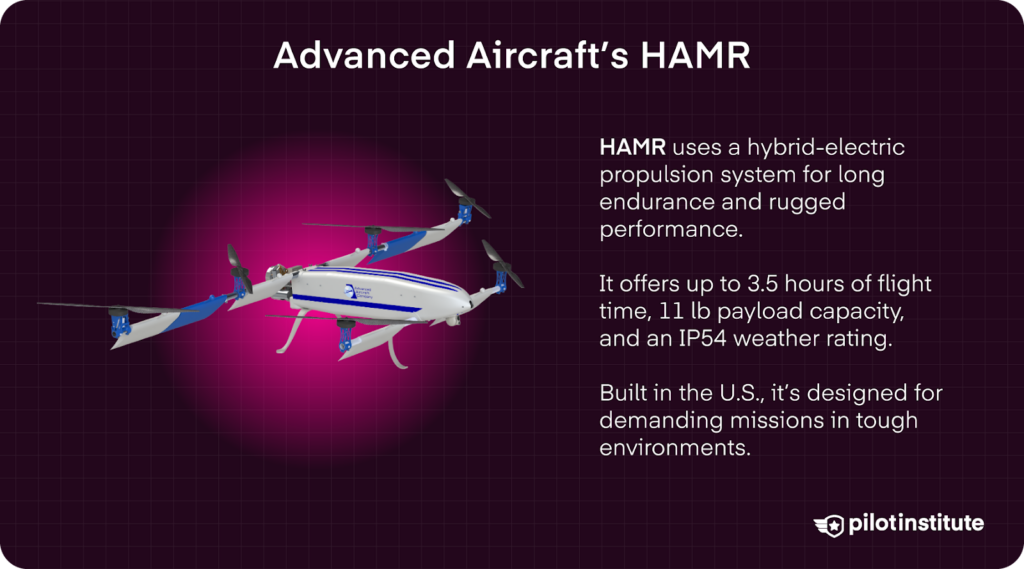
Advanced Aircraft’s HAMR uses a hybrid electric propulsion system that increases its efficiency and range. It offers a maximum flight time of 3.5 hours and a maximum payload capacity of 11 lb (4.9 kg). Combined with its IP54 weather rating, this makes HAMR incredibly rugged and built for tough environments.
The drone comes with a hefty price tag of around $120,000.
Still, Advanced Aircraft is a Veteran-owned company, manufacturing its drone models right here in the U.S. This makes it a great option for pilots looking for domestic drones without the hassle of potential bans or increased security issues.
Freefly Astro Max (NDAA/ Blue): $28,995
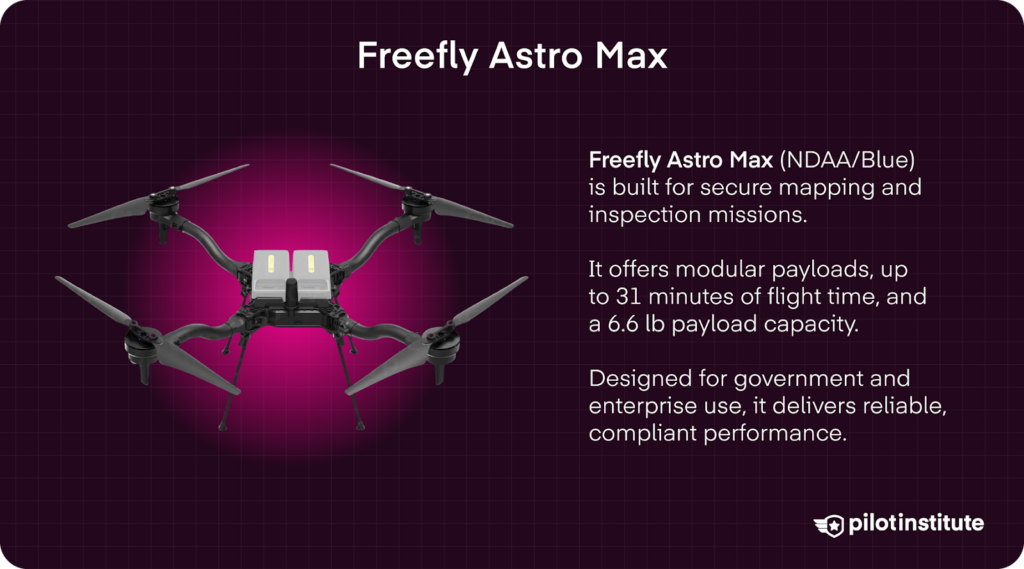
Freefly is a great American-made drone company that offers unique models to suit all operational needs. The Astro Max (NDAA/Blue) edition is designed for high-performance mapping and inspection. It has the security clearance and compliance to work in sensitive operations.
It offers a modular payload system that still allows for 31 minutes of flight time with a max payload of 6.6 lb (3 kg).
Its robust reliability and compliance make it perfect for both government and enterprise missions.
Parrot ANAFI USA (Blue): $14,000
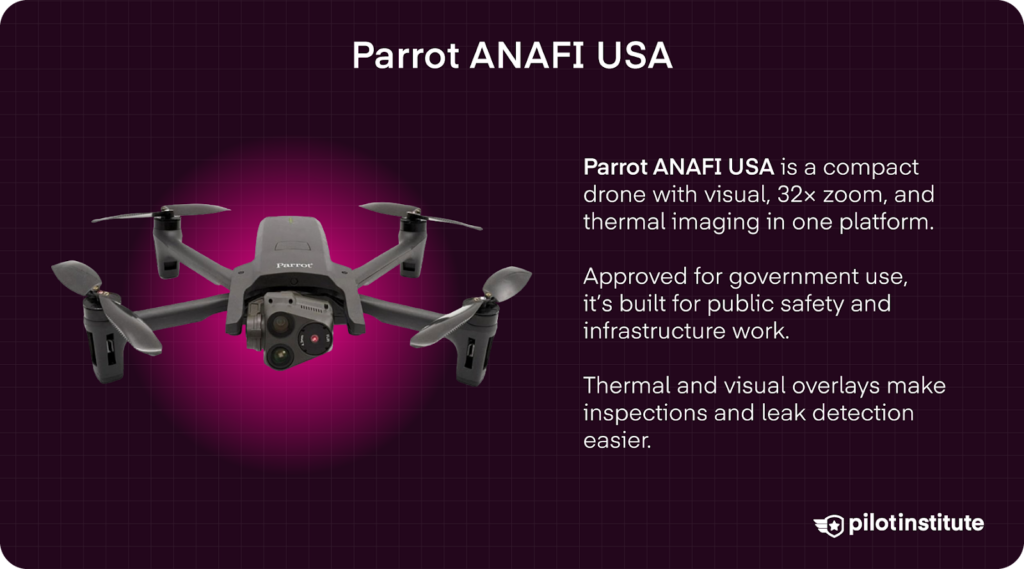
The Parrot ANAFI USA is a compact, lightweight drone equipped with a regular camera, 32x zoom, and a thermal sensor, all in one platform. Made in the U.S. and listed on the Department of Defense’s Blue UAS list, it’s approved for government use, making it attractive for professional pilots targeting public sector clients.
A rugged upgrade from the original 2018 ANAFI, it keeps its portability while adding advanced imaging and autonomous flight features. The ability to overlay thermal and visual images is especially useful for infrastructure inspections or detecting pipeline leaks.
Third-party retailers offer the USA Gov. Edition for $14,000. While still pricey, it’s one of the most affordable options on the Blue UAS list, ideal for fast deployment and complex thermal imaging tasks in field operations. Make sure to check out our Parrot ANAFI USA Deep Dive to learn more about its capabilities.
Why Are These Drones So Expensive?
What makes these drones so expensive anyway? Let’s look at the technology inside these drones and what you can expect when you buy some of the most expensive drones available today.
Cutting-Edge Technology and Features
High-end drones pack serious innovations like 8K video, 120 fps, 20x zoom, low-light performance, and 360° panning. The DJI Inspire 3 is a great example, made for cinema-quality shots. Many support swappable payloads, letting you switch between cameras, thermal sensors, or LiDAR.
They also include autonomous flight systems. The drone can follow subjects or fly preset routes. It uses GPS, cameras, infrared, or LiDAR to avoid obstacles in complex environments.
Performance-wise, these drones offer longer flight times, higher speeds, and extended range. This makes them ideal for large-area coverage or tracking fast-moving targets with precision.
Specialized Applications
These drones are expensive because they’re built for specialized applications. They are best for industrial and enterprise use, serving professionals and commercial clients.
Industries use drones for mapping and inspections. They reduce worker risk while collecting detailed data. LiDAR, multispectral sensors, and high-res cameras make them perfect for facility checks and precision agriculture.
Such drones offer efficiency gains and so much more. They justify their cost by delivering repeatable, survey-grade accuracy and autonomous workflows that would be impractical using traditional manned aircraft or ground crews.
Premium Build Quality
Top-tier drones are also built to last. Made with materials like carbon fiber or titanium, they stay strong and light, improving flight time and handling moderate weather with ease. Rugged IP ratings ensure performance in rugged conditions.
To protect your investment, they come with safety features like auto-return and obstacle sensors to avoid crashes and ensure safe landings during signal loss or low battery.
Many also support customization. With SDKs like DJI’s, you can add third-party sensors or software. Even without coding, most premium drones offer flexible payload setups. This is great for professionals who need versatility across different services and tasks.
Factors to Consider Before Purchasing an Expensive Drone
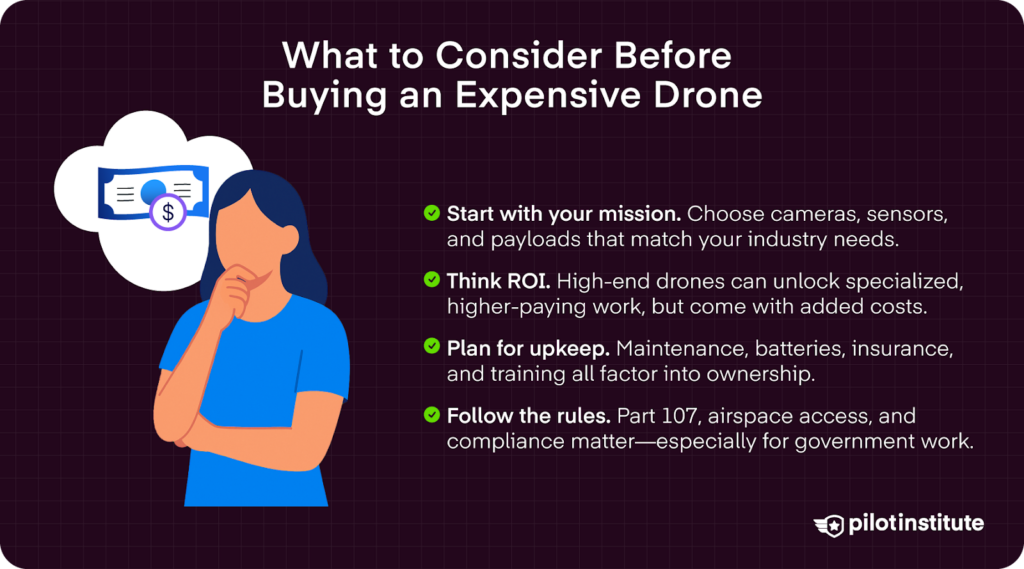
Once you’re sure that you have the budget for an expensive drone, the next decision is which model you should buy. Most of these drones are so specialized that you should be able to narrow down your choices quickly.
Still unsure? Here are some factors to consider.
Specific Purpose and Requirements
Buying an expensive drone really comes down to what your industry needs. Do you just need a 4K gimbal camera, or something more advanced like LiDAR or thermal imaging? Overspending on features you won’t use can cost you thousands.
Your gear should match your project type. Filmmaking and precision mapping require totally different setups. The last thing you want is pricey equipment that doesn’t fit your client’s needs.
Also, keep regulations in mind. Most drones fall under Part 107 rules, but anything over 55 lb (like with cinema rigs or delivery drones) may need special licensing. It’s doable, but it takes more time and effort.
Evaluating Professional vs. Personal Use
In fields like mapping, filmmaking, or inspections, a high-end drone may be necessary. A trusted brand can help you stand out in a growing sea of competition. Even when not required, top-tier drones offer a competitive edge. But skill matters more than gear, so keep practicing.
If it’s just for fun, a pricey drone likely isn’t worth it. You can find excellent models around $1,000 for photos and casual flying. Take DJI’s latest Mini 5 Pro, for example, which is only $1,149 for a bundle including multiple batteries.
High-end drones are harder to fly and may require certification for tasks like thermal imaging. Unless you’ve got a clear plan and budget, it’s smarter to start simple.
Assessing Return on Investment (ROI)
Before buying an expensive drone, factor in potential income alongside costs like maintenance and accessories.
High-end drones can land you niche, high-paying gigs like LiDAR mapping or industrial inspections, possibly paying $2,500–$9,000 per day. But it takes serious investment in both equipment and skills.
Even if you plan to upgrade, premium drones hold their value well, making them a smart investment for building your professional drone career.
Maintenance and Operational Costs
If you’re investing in a pricey drone for business, remember to budget for maintenance and operating costs. They add up and affect your service pricing.
Routine upkeep is fairly low-cost, but frequently used drones should get a professional check-up every 3 to 6 months. You’ll also need spares like propellers, batteries, SD cards, and may face occasional repairs for the camera or gimbal.
And don’t forget insurance! When your gear costs thousands, coverage is a must. Premiums may be higher, but it’s worth it for protection against damage, accidents, or liability. Especially during commercial jobs.
Legal and Regulatory Compliance
If you’re flying a high-end drone, here’s a quick reminder of key regulations to follow:
- Licensing: You’ll need FAA Part 107 certification, which includes passing a test, registering your drone, and flying within legal limits.
- Airspace Rules: The FAA considers drones aircraft. Stay under 400 feet and give way to manned aircraft. For controlled airspace, request access via the LAANC system in supported apps like Aloft.
- Privacy: The FAA doesn’t regulate privacy, so check local laws. Be extra careful when filming in populated areas.
- Federal Work: Planning to work with government agencies? Only drones on the Blue UAS list are approved. DJI models aren’t included, which may limit your options.
Conclusion
Expensive drones come with high-end tech, top-tier build quality, and advanced features that justify their cost. For professionals, investing in one can be a smart move. But for hobbyists, they’re often impractical.
Still, you should match your drone choice to your budget and industry needs. Do you really need a $10,000 model, or will a $3,000 drone do the job for now?
It’s perfectly reasonable to start with something more affordable while gaining experience and building your business. High-end drones are a big investment, so weigh your options carefully. A gradual, strategic approach to becoming a professional drone pilot is both realistic and makes smart business sense.