
- Key Takeaways
- FBO Fundamentals
- FBO Core Services Offered
- Aircraft-Centric Services
- Passenger & Crew Amenities
- Concierge & Ground Logistics
- FBO: Fees, Fuel, and Waivers
- Parking
- Fuel and Aircraft Services
- How to Research Costs Before Landing
- Strategies to Minimize Expenses
- A Walk-Through: Using an FBO Step by Step
- Arrival
- Inside the Facility
- Departure
- Safety & Regulatory Landscape
- Fire & Fuel Handling Rules
- Industry Snapshot & Future Trends
- The Green FBO of the Future
- Choosing the Right FBO for Your Mission
- Red Flags & Questions to Ask
- Example Scenarios
- Frequently Asked Questions
- Can you sleep in the FBO overnight?
- Do you need a reservation for fuel on weekends?
- What ID do passengers need for a Part 91 flight?
- Are pets allowed inside the FBO?
- Conclusion
An airport does not truly come alive for you until you taxi onto the ramp and meet the people waiting there. That is where the FBO steps in.
It greets you after a long leg. It fuels your aircraft. It points your passengers toward a quiet lounge while you sort out the details of your flight.
FBOs shape your first impression of a destination and your last memory before departure. Every smooth turnaround usually starts right there.
How do FBOs work? How much should you budget for them? Let’s talk about how you can choose the right one for your needs.
Key Takeaways
- An FBO supports your aircraft, passengers, and turnaround from arrival to departure.
- FBOs range from small independents to large networks with varying available services.
- Fees vary widely, so research fuel prices and ramp charges beforehand.
- Make FBO arrangements ahead of time for a smoother arrival and fewer surprises on the ramp.
FBO Fundamentals
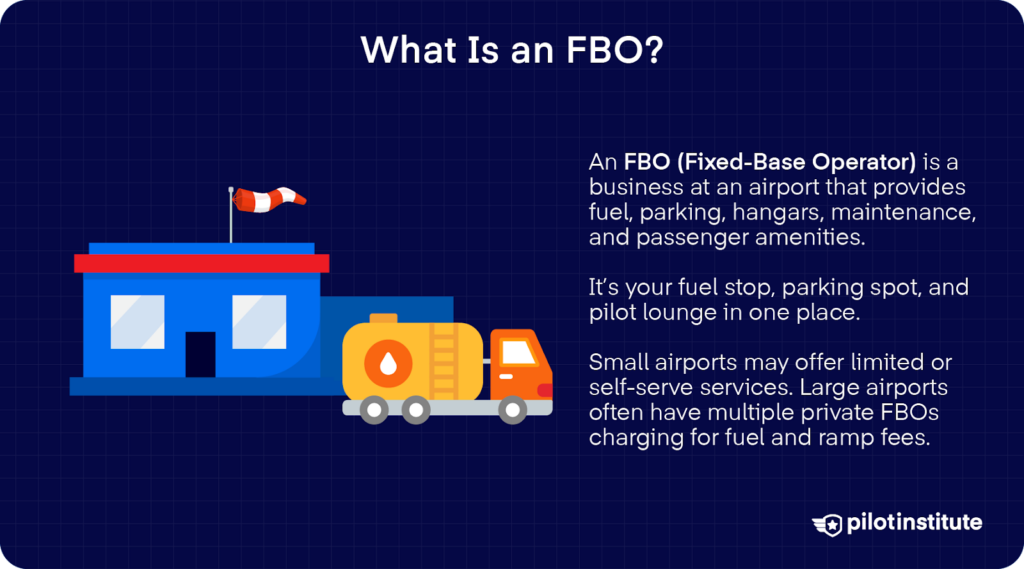
An FBO (Fixed-Base Operator) is a commercial business that sets up shop at an airport and offers aeronautical services. Those services can include things like fueling, hangaring, tie-down and parking, and aircraft maintenance.
But what does it actually mean for you, as a pilot or passenger?
An FBO is your valet, fuel station, mechanic shop, and lounge, all rolled into one. When you need to top off your tanks, park somewhere safe, or grab a cup of coffee while you wait out the weather, the FBO is the place to go.
Smaller airports often handle things a little differently. Some of them have an on-field FBO, while others rely on self-serve fuel. It could be from a contract fuel provider or airport-run services.
Amenities and hours can be limited, so check the airport directory before you go.
Large airports in major cities operate in a different world. They often have multiple privately owned FBOs on the field.
These privately owned FBOs earn money from the services they sell. It could be from fuel margins, handling services, and ramp fees.
FBO Core Services Offered
Aircraft-Centric Services
Every FBO facility exists, first and foremost, to accommodate the physical needs of your aircraft.
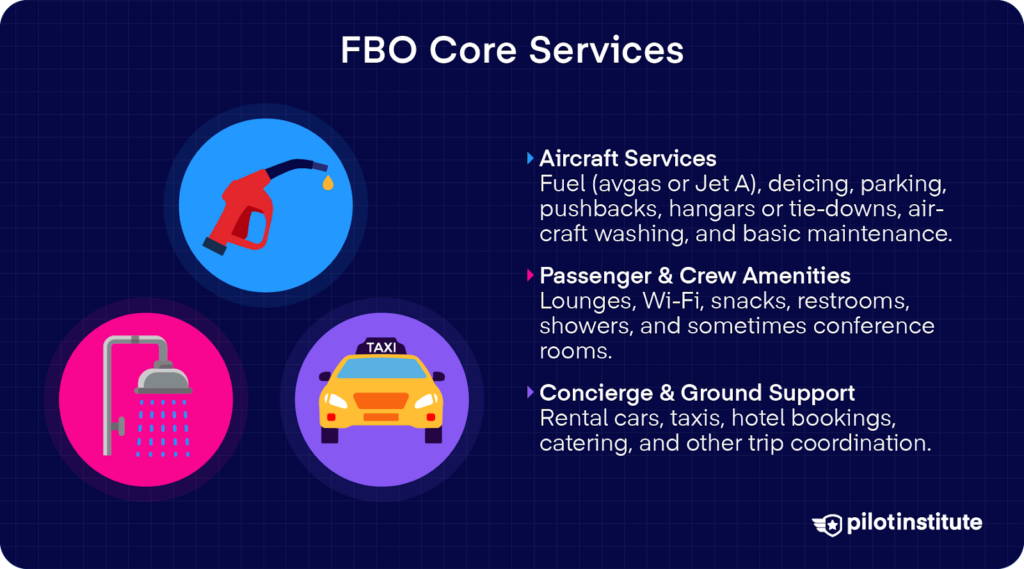
Fueling is the most visible of these services. Line technicians pump avgas for piston aircraft and Jet A fuel for turbines. You could also avail extra services like anti-icing or deicing.
There are also ramp agents who do pushbacks and aircraft positioning. Hangar storage protects your aircraft from weather and unauthorized access.
Looking for something cheaper? Tie-down spaces are a perfectly good alternative, especially when hangars are full.
Does your aircraft need a wash? Some FBOs can handle that too! They could even do maintenance work on the airframe, power plant, avionics, or instruments.
Passenger & Crew Amenities
Is that all of it? We’re just getting started.
You and your passengers can even have a place to rest. You can sit back and take care of your needs while they service your aircraft.
You’ll find many FBOs with lounges where you can sit comfortably. Connect to the Wi-Fi and grab a snack before departure.
They also have the basics like restrooms and sometimes even a shower!
Some FBOs go even further. You might visit one with conference rooms for meetings.
Concierge & Ground Logistics
The FBO is your first point of contact with the earth. It’s there to make your visit easier, especially when you’re at an unfamiliar airport or when timing is tight.
Concierge support can arrange for your ground transportation, like taxis or rental cars, before you arrive, so you don’t have to sort that out on the spot.
They could even help with hotel and restaurant bookings or catering orders.
FBO: Fees, Fuel, and Waivers
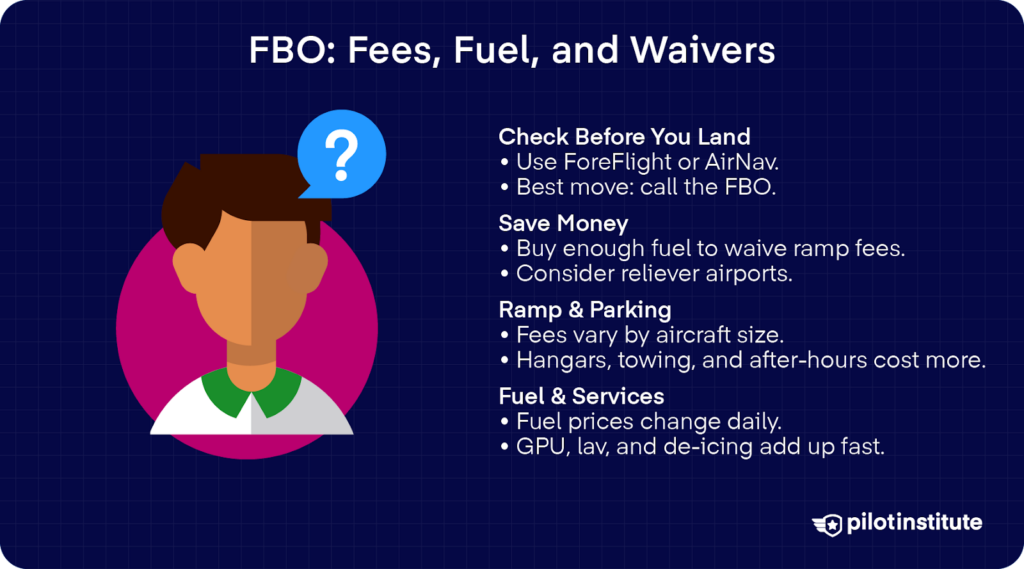
FBO fees can catch you off guard if you’ve never looked into them. So, how much should you budget for those after-landing expenses? Let’s talk about the costs of general FBO services.
Parking
Ramp fees are one of the most common charges, and they scale with aircraft weight.
Single-engine piston aircraft often pay nothing at all or somewhere around $25 to $35. Multi-engine piston types fall between $15 and $75.
Overnight tiedown parking fees can also depend on weight. For a single-engine aircraft, expect to pay $5 to $45 per night. Multi-engine types range from about $7 to $95.
Need hangar space instead? That’s a bigger jump. Single-engine hangar rates range from about $50 to $175 per night. Multi-engine runs from $75 to $300, and jets from $200 all the way up to $1,400 per night.
Some locations charge even more during winter months or charge a premium for heated hangars.
For aircraft towing fees, FBOs can charge around $100 to $150.
Fuel and Aircraft Services
Fuel prices move constantly. As a rough reference, U.S. averages in late February 2026 were about $6.36/gal for Jet A and $6.43/gal for 100LL, with self-serve often lower where available.
The smaller line items add up, too. GPU starts typically cost around $60 to $100 per use. Lavatory service runs $90 to $100.
De-icing, when offered, can be particularly expensive. It runs for around $30 per gallon of fluid, with a 10-gallon minimum plus hourly labor charges on top.
And if you need the FBO to call out staff after hours, expect a call-out fee of about $200.
Even something like a courtesy car can come with strings attached. Some locations offer complimentary use for a couple of hours, then charge a flat fee plus an hourly rate beyond that window.
How to Research Costs Before Landing
Just an important disclaimer: the fees you’ll pay will vary dramatically by airport, season, events, and aircraft size.
How can you find out FBO pricing ahead of time? You have a few good options. Apps like ForeFlight have an FBO tab that shows published fees and fuel prices at most airports.
AirNav is another popular go-to, though you’ll want to filter user comments to see the most recent prices.
But if you really want to be sure, just call the FBO’s line desk directly. A two-minute phone call can save you from a surprise invoice.
Strategies to Minimize Expenses
The simplest way to save money is to buy enough fuel to hit the minimum and get your ramp fee waived. Even if you don’t need a full top-off, just buying the required gallons often costs less than paying the ramp fee outright.
Then there are fuel card networks, which are another smart way to lower expenses. You can have access to negotiated pricing below the posted ramp rate, without the need for advance fuel releases.
If you want to save, consider landing at a nearby secondary or reliever airport. Their flowage fees and fuel prices tend to be lower than at the primary field.
A 15-minute drive into town might save you a meaningful amount per gallon, especially if you’re filling up a larger aircraft.
A Walk-Through: Using an FBO Step by Step
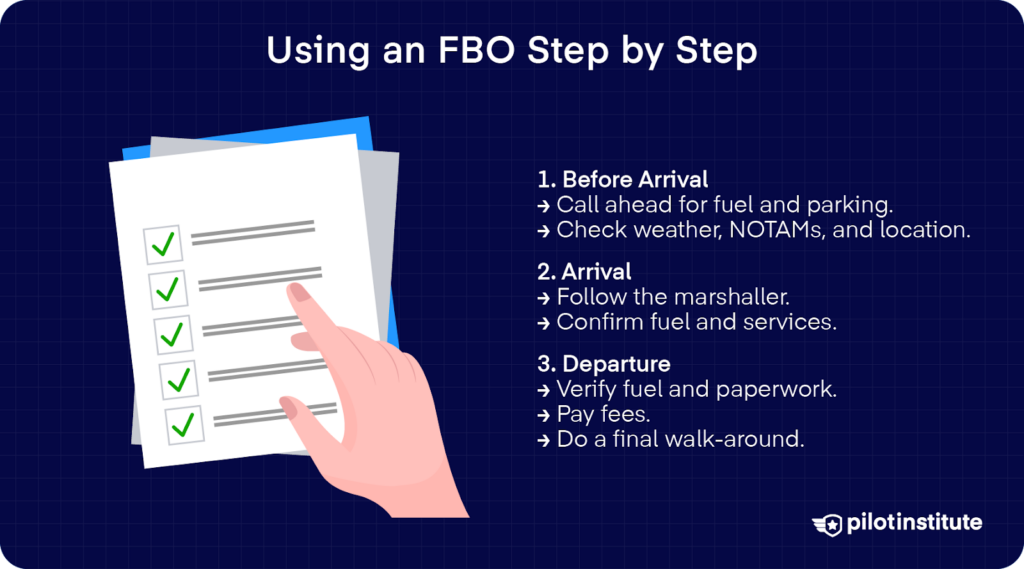
Your FBO experience actually starts before you even touch down. Once you’ve decided where you’re landing, give the FBO a call. You should make sure they can handle what you need.
That’s especially important if you have specific requirements, like hangar space or a particular fuel type. Let them know your ETA and any special requests.
Why is that so important? You see, not every FBO stocks every fuel type, and hangars can fill up fast at busy airports.
On the flight planning side, make sure you account for the FBO’s location on the field. There can be many FBOs at some airports, so try not to get lost.
Check the weather conditions and NOTAMs for your destination so you’re not caught off guard by a closed taxiway or runway construction.
And if your flight involves an international arrival, sort out your customs and immigration documents before you even take off.
Arrival
Once you’ve landed and cleared the runway, the first order of business is getting to the ramp. A marshaller will typically guide you into your parking spot with hand signals, so follow their lead.
From there, confirm with the line crew whether you’re staying on the tiedown or heading into a hangar.
If you need fuel, now’s the time to place that order.
With the aircraft squared away, you can request any ramp services you need. Does the aircraft need a GPU hookup before the next departure? Ask for it now so it’s scheduled.
The same goes for lavatory service and potable water. These things take time to coordinate, so you should get your requests in early.
Then there’s the people side of things. Point your passengers towards the FBO lounge or waiting area while you sort out ground transportation.
Most FBOs can help arrange a shuttle or crew car. If you and your crew are overnighting, check the rest facilities, such as showers and sleep rooms.
Inside the Facility
Once you’re in the facility, you can take care of everything between arrival and your next departure. If the aircraft needs maintenance or repairs, let the staff know so they can get the work started right away.
What about your next flight? Most FBOs have all your flight planning needs, like computers, internet access, and weather briefing stations.
Review the conditions on your route and make sure all your papers are in order.
If you need catering, place that order during this window too. You can also stock up on pilot supplies and pick up updated charts if they’re available.
Departure
Before you head back to the cockpit, don’t forget to make sure that the refueling is complete. Check the fuel quality, and verify if any maintenance has been finished and documented.
How about paperwork? You should handle customs and immigration documents if your flight requires it. Then, settle any outstanding invoices with the FBO. Make sure to read the bill line by line.
Once that’s wrapped up, ask for pushback or towing if your parking position calls for it.
One last thing before you strap in: walk the aircraft. Do a full 360-degree inspection to check the fuel caps or anything that might have been missed during servicing.
Afterwards, brief your passengers on departure procedures. Coordinate with the FBO on any last-minute changes, and you’re ready to go.
Safety & Regulatory Landscape
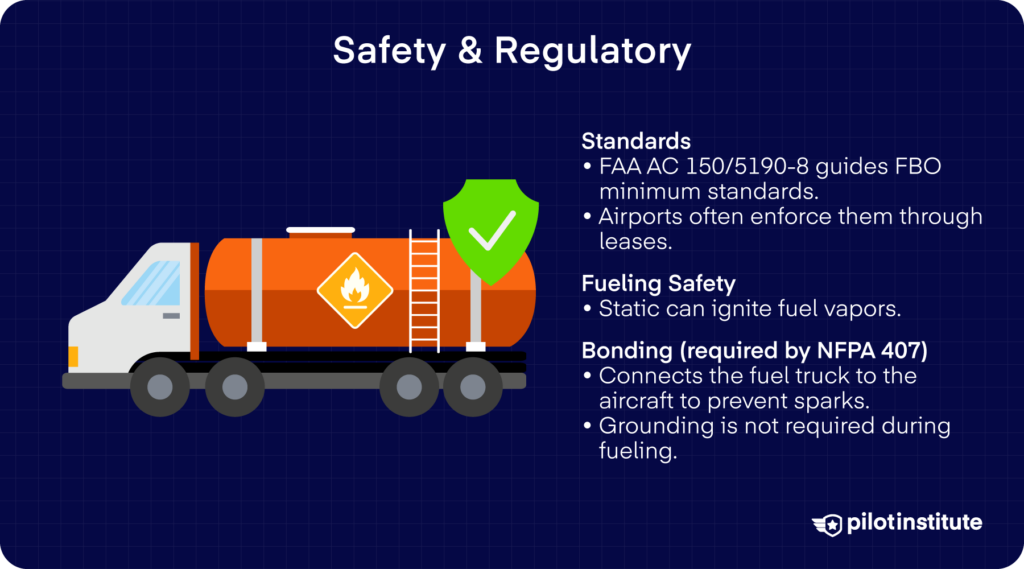
Who decides what services an FBO has to offer? The guiding document is FAA AC 150/5190-8.
The guidelines in it aren’t exactly mandatory, but the FAA strongly recommends that airport sponsors adopt minimum standards for the FBOs on their field.
Most sponsors place those standards directly into the FBO’s lease, which makes them contractually binding. The FAA also encourages airports to publish and update those standards so everyone understands the rules.
Fire & Fuel Handling Rules
Fueling looks simple enough until you learn about the consequences if you don’t do it right.
Static electricity can ignite fuel vapors. That risk brings up one common confusion: bonding versus grounding.
What’s the difference? Bonding connects two conductive objects, like the fueling vehicle and the aircraft, using a cable. It’s required by NFPA 407.
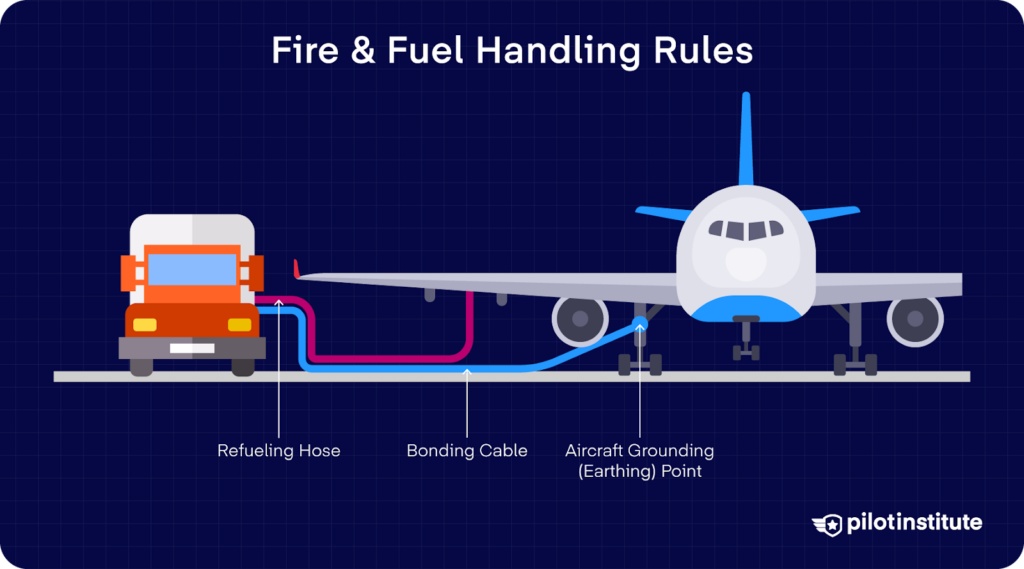
Bonding is meant to equalize the electrical potential. No difference in charge means no spark when the fuel flows.
Grounding, on the other hand, uses a cable to connect equipment directly to the earth.
Aircraft tires contain conductive material that provides some static discharge path to the earth, but they are not relied upon as the primary means of eliminating static hazards.
The NFPA dropped the grounding requirement in 1990, leaving bonding as the sole requirement during fueling.
Industry Snapshot & Future Trends
Publicly owned FBOs are run by cities, counties, airport authorities, or other government groups. You often see them at smaller community airports.
What are they like? Well, they’ve got all the basics, such as fuel and parking. But if you’re looking for more amenities, this might not be the place for you.
The biggest pro, though, is the fairly stable pricing.
Privately owned FBOs can be grouped into three, depending on their scale.
First, you’ve got independent FBOs. They’re your mom and pop operators, and they usually have just one or two locations.
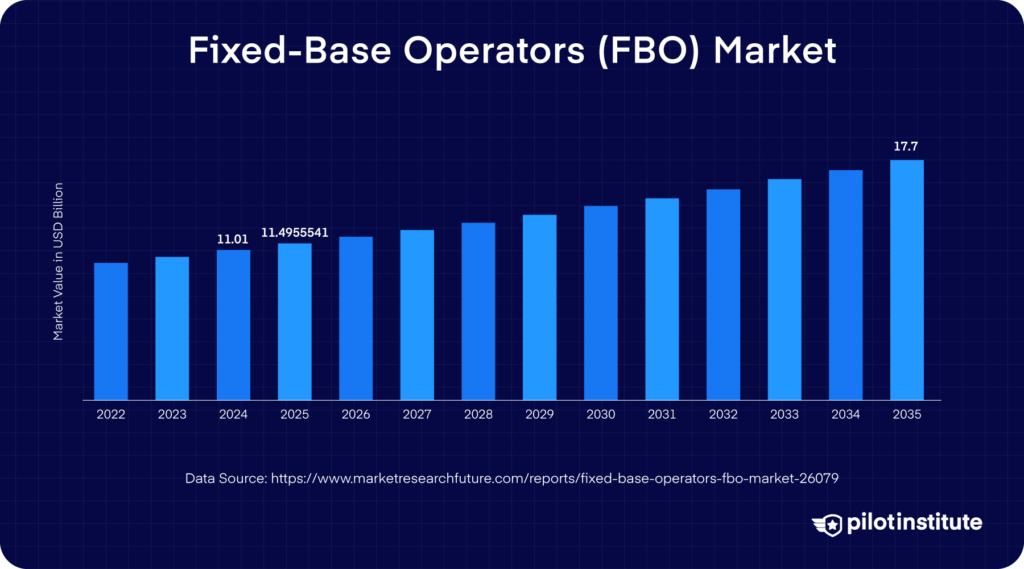
They may be small, but they are plenty. Independent FBOs make up the largest share of the market, at 46 percent!
You usually get personal service and local knowledge, which is excellent for their regulars.
That said, they may pay more for fuel and equipment, which can affect their prices.
Small networks operate three to five locations. They often stay within one region, and that allows for shared staff and better fuel purchasing power.
You get some consistency without losing the personal feel. Still, they can’t match the reach of national brands.
Large networks and franchises run in many locations under one brand. You get standardized service and systemwide discounts. Loyalty programs also give your stay a considerable upgrade.
The downside? Well, just because they’re so big, the service can feel less personal.
The Green FBO of the Future
Sustainability is no longer a side project for FBOs, and you can see it on the ramp.
Some facilities now install rooftop solar arrays on hangars and terminal buildings. That power runs electric tugs and other ground support equipment.
Sustainable Aviation Fuel (SAF) is part of the picture, too. NATA launched the Sustainability Standard for Aviation Businesses to give FBOs and other aviation businesses a self-certification process for reducing their carbon footprint.
The effort ties into a bigger national objective. The U.S. SAF Grand Challenge calls for producing 3 billion gallons of SAF per year by 2030.
Hydrogen is another rising alternative. Amsterdam’s Schiphol Airport began a trial using a hydrogen-powered tow vehicle and a prototype Toyota pickup truck in place of fossil-fueled equivalents.
Choosing the Right FBO for Your Mission
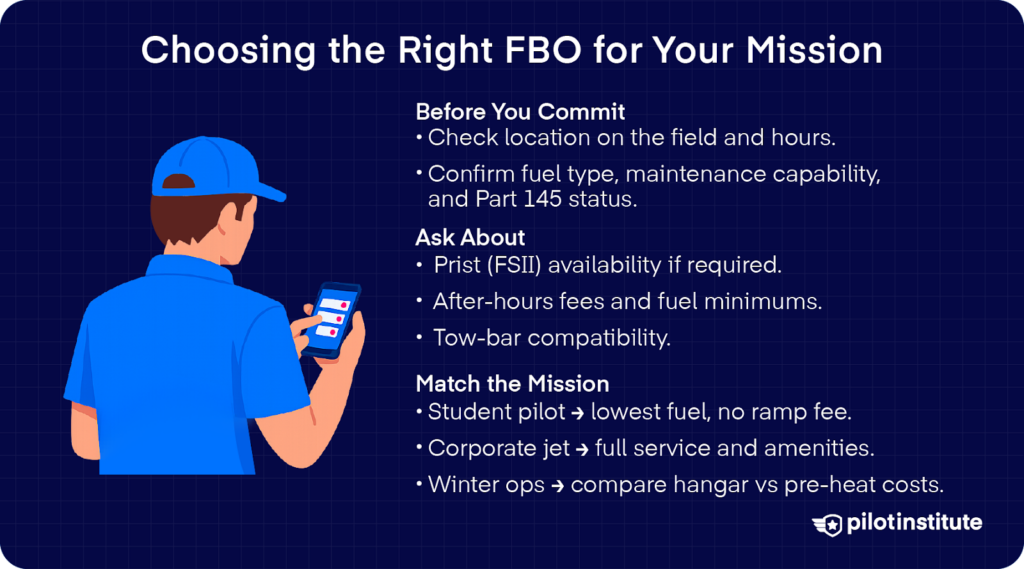
Not every FBO is the right fit for every trip, so it helps to think through a few things before you commit.
Start with the field location. Is the FBO midfield with a short taxi, or tucked away at the far end of the airport? That makes a huge difference in your ground time.
Check hours of operation, too. Showing up after closing means you’re either paying a call-out fee or waiting until morning.
If maintenance is a concern, find out whether the FBO can handle on-site repairs.
Repair stations are rated across categories, including airframe, powerplant, propeller, radio, instrument, and accessory.
Not every shop can handle every job, but an FBO with a Part 145 station gives you more options.
Red Flags & Questions to Ask
A few pointed questions can save you real headaches. If you fly a turbine aircraft, ask whether the FBO carries Prist-injected Jet A.
If an aircraft’s AFM lists FSII (Prist) use as a limitation, it’s mandatory for those conditions. Operating contrary to AFM limitations is not optional, and not every FBO stocks FSII.
Also, ask about after-hours fees and minimum fuel uplift requirements so you aren’t surprised at checkout.
Regardless of whether your aircraft has fixed or retractable gear, you should confirm tow-bar compatibility before you let anyone move it.
The wrong type of towbar or makeshift equipment can damage the aircraft and even injure personnel. Damage to the nose fork from an incompatible bar is a real risk, not to mention an expensive fix.
Example Scenarios
If you’re a student pilot on a long cross-country, you’re probably looking for the cheapest avgas on the field and no ramp fee. What’s your best bet? A small independent FBO at a secondary airport, more likely than not.
Now, if you’re a corporate traveler arriving in a midsize jet, the priorities change entirely.
You need a GPU ready on arrival and a rental SUV waiting planeside. You’ve got guests to look after, so a full-service chain FBO makes more sense.
What about a winter weekend trip to the mountains? You’ll want to compare the cost of an overnight heated hangar against a pre-heat service the next morning.
At some resort airports, hangar rates for jets run several hundred dollars per night. But that might still be cheaper than dealing with a cold-soaked engine, plus the delays that come with it.
Frequently Asked Questions
Can you sleep in the FBO overnight?
In some facilities, yes, you absolutely can.
Some FBOs have dedicated crew rest rooms with recliners or cots. Others will let you crash in the pilot lounge if you ask nicely.
Just remember, many lock their doors after hours, so don’t count on it without calling ahead. If you’re overnighting with your aircraft, ask about crew accommodations when you make your fuel or parking arrangements. Or better yet, before you even take off.
Do you need a reservation for fuel on weekends?
While it’s not always required, it’s a good idea, especially at busier airports or during peak seasons.
Weekend traffic at popular destinations can strain an FBO’s fuel supply and staffing. Call ahead or place a fuel order through an app to make sure the truck is ready when you arrive. You also avoid sitting on the ramp waiting.
At quieter fields, though, you can usually show up unannounced and get fueled without much delay.
What ID do passengers need for a Part 91 flight?
Here’s where general aviation differs from the airlines. Most domestic Part 91 GA flights do not go through TSA passenger checkpoints, and passengers are often not required by federal rules to present ID to the pilot or FBO.
But some airport or FBO policies could still require identification, and international flights always involve passport/customs requirements.
TSA screening applies to commercial operations, not private ones.
That said, some FBOs at airports with heightened security may ask for ID as a facility policy. And if you’re flying internationally, everyone on board will, of course, need a passport and any applicable customs documents.
Are pets allowed inside the FBO?
Most FBOs will let you bring a pet into the lobby, though policies vary.
Some require a carrier, while others are fine with a leash. And service animals are generally welcome everywhere.
If you’re traveling with a pet, mention it when you contact the FBO so there are no surprises at the door. Just keep in mind that some pilot lounges and crew rest areas may have different rules from the main terminal area of the airport.
Conclusion
The people at the FBO are there to catch you at the end of a long leg and set you up for the next one.
They fuel your aircraft, protect it from weather, and keep small problems from turning into big delays. It gives your passengers a place to breathe. It gives you time to think.
As for you, remember to call ahead. Ask smart questions. Even as you approach your destination, you can always fly smarter.