
-
Pricing and Combos
-
Drone only ($669) or with controller ($759)
-
Drone and new RC Controller ($909)
-
Fly More Combo ($189) and Fly More Combo Plus (249)
-
A flying frog?
-
Do you even lift?
-
Flight Time
-
A New Controller
-
A new 48MP 1/1.3” sensor
-
Vertical Mode for YouTubers only?
-
Photography Modes
-
Camera Test and Samples
-
Better than a 1” 20MP sensor?
-
Video Performance
-
Intelligent Flight Modes for the first time!
-
Safety Features
-
Category 1 drone and Remote ID
-
Final Thoughts
-
Where to buy
-
A different take on the drone
The competition for the sub-250 gram drones is getting fierce! With this latest release, DJI is going heads on with Autel and its Nano series. For the first time, we are seeing obstacle avoidance sensors in a Mini. We also get new intelligent flight modes taken directly from the Air and Pro series.
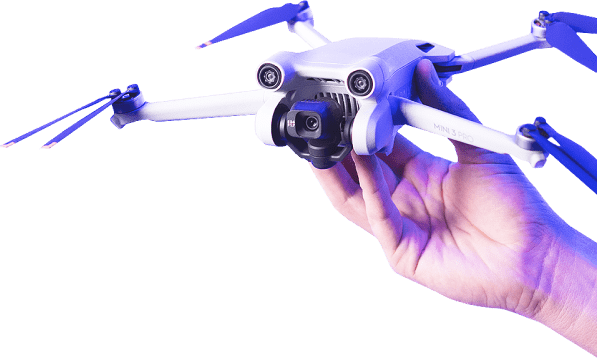
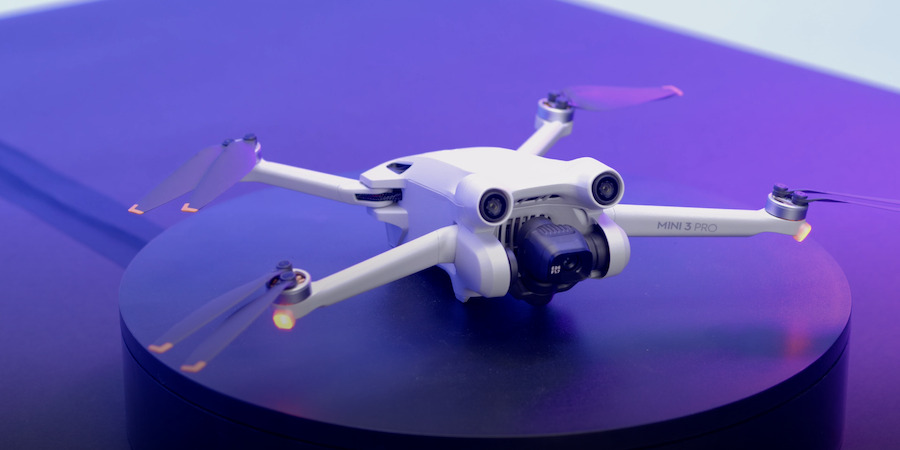
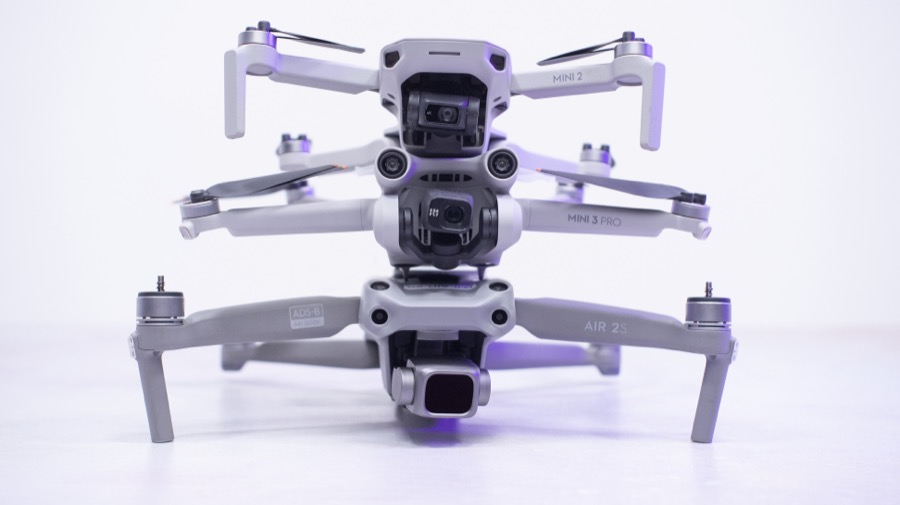
It’s no surprise that this new drone is called Mini 3 Pro, emphasis on the “Pro”. Don’t let the lightweight fool you, this aircraft is packed with amazing features. A bold new look (a flying frog?), a larger camera, a new vertical mode, two types of batteries, and a brand new controller, the Mini 3 Pro will be competing with more than 250-gram drones!
Pricing and Combos
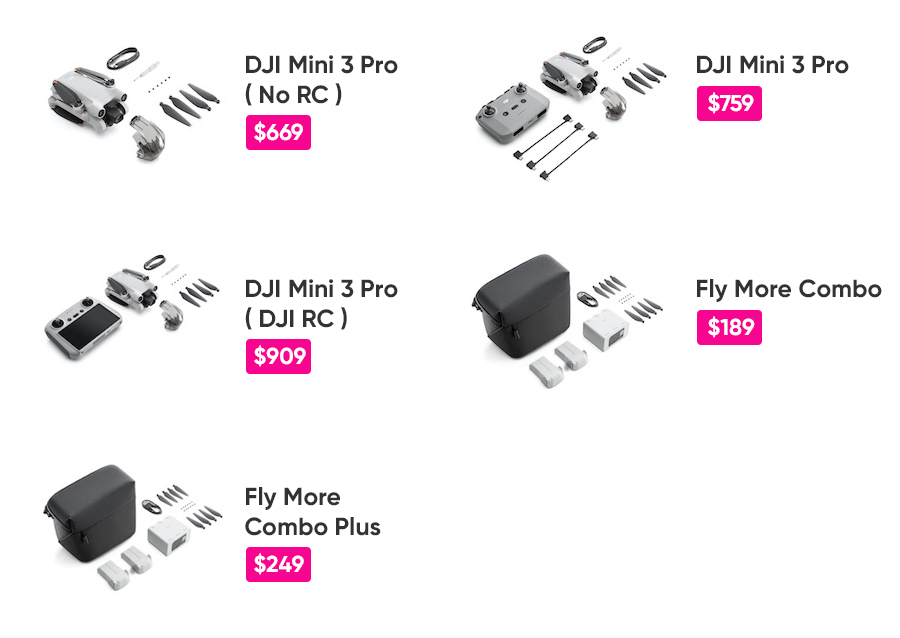
As far as package options, DJI went with the “more is better” route. You can buy the drone in three base kits and add two “Fly More” combos.
See the price on Amazon (affiliate link).
Learn more on the DJI website.
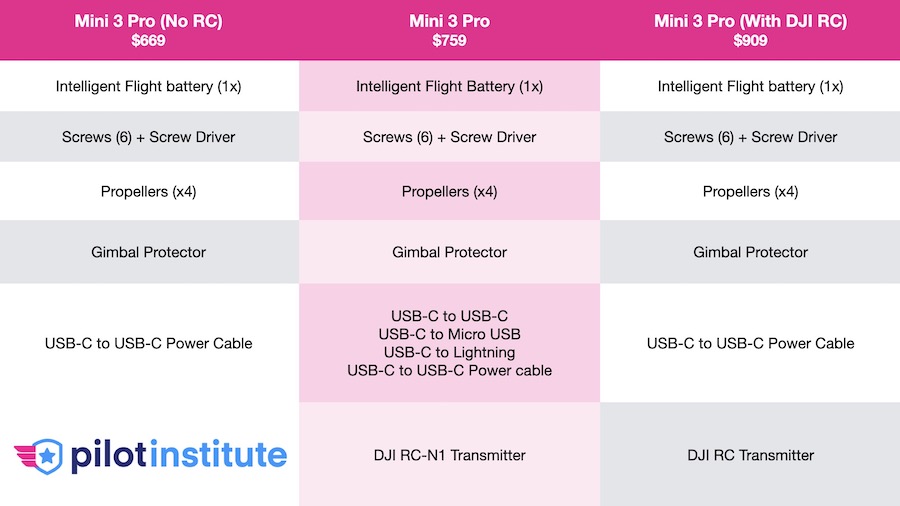
Drone only ($669) or with controller ($759)
For the first time, DJI allows you to purchase the drone without a controller. Nifty if you already own DJI drones, specifically the ones with the RCN1 controller. You know, that grey controller that comes with the Mini 2, Air 2, Air 2S, and Mavic 3.
How does it compare to the competition? An Autel Nano is $799, the Nano+ is $899. A Mini 2 is $449. At $759 with a controller, that’s a big jump from its older brother but right in line with the Nano series. It might be a sad realization for some that the Mini 3 Pro is no longer an entry-level drone. It’s now a hybrid between the Mini 2 and the $999 DJI Air 2S.
Drone and new RC Controller ($909)
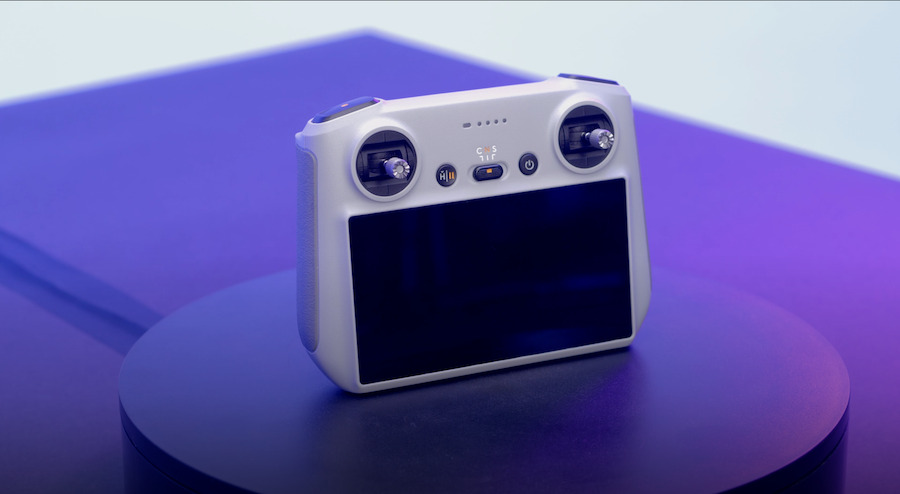
DJI introduced its new RC controller. A lighter version of the RC Pro that ships with the Mavic 3 Cine. At only $10 more than the Nano+ package and its standard controller, get ready for endless arguments online regarding which drone is best!
Fly More Combo ($189) and Fly More Combo Plus (249)
Don’t have enough of one battery? Get a Fly More Combo… or two. You can now choose between the standard battery or a “Plus” battery that gives you more flight time. A possible downside with the “Plus” battery; the drone weighs 30 grams over the 250-gram limit, requiring this drone to be registered with the FAA even for recreational purposes.
With each combo, you get two batteries, a 3-battery USB charger, 8 additional sets of propellers (which is only one full set), and a small bag to carry it all.
A flying frog?
The original Mini and the Mini 2 were almost indistinguishable. The Mini 3 Pro is a serious departure from its predecessors when it comes to design. We are already calling it “The Flying Bullfrog”.
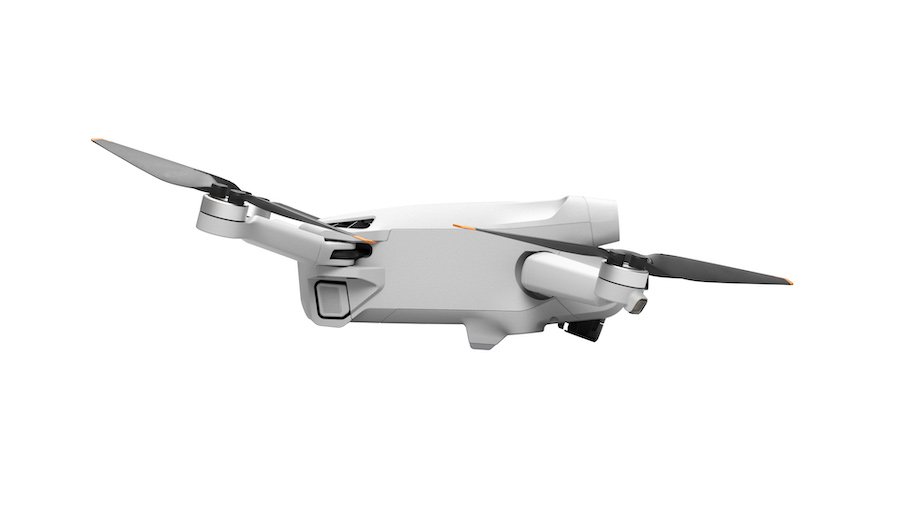
The Mini 3 Pro front arms are lower than the back arms to improve performance during forward flight. This allows for the back legs to receive clear airflow. The results are pretty impressive with a very maneuverable and responsive aircraft. Our entire team was surprised at how zippy the aircraft is, in Normal mode but especially in Sport mode.
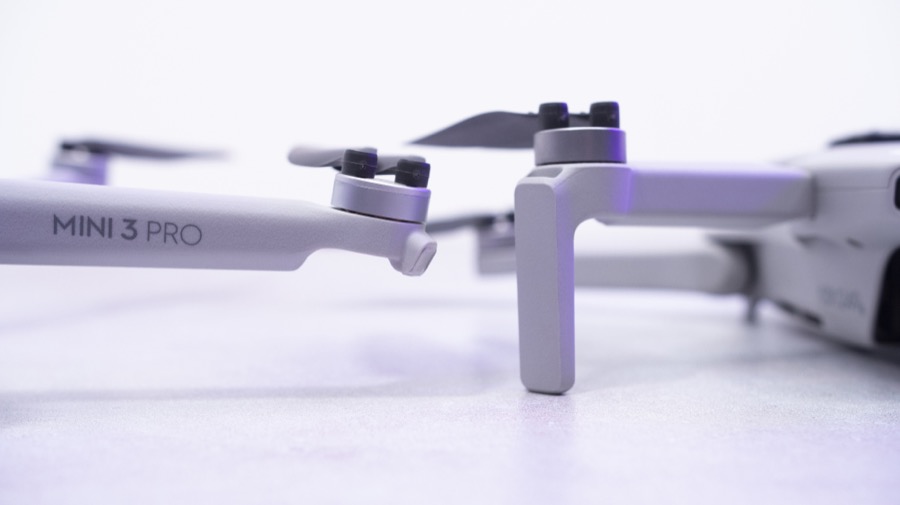
DJI also forewent the antenna legs on the Mini 3 Pro. As a result, the aircraft no longer sits on the front “legs” during landing but rather on a set of pads under the body of the aircraft. On the plus side, this design allows you to fold and unfold the legs in any order. There will certainly also be fewer broken legs during hard forward crashes. On the downside, landing on uneven surfaces can tilt the aircraft to the point where the propellers might hit the ground. This almost happened to us when landing on a pad on a rocky field.
Do you even lift?
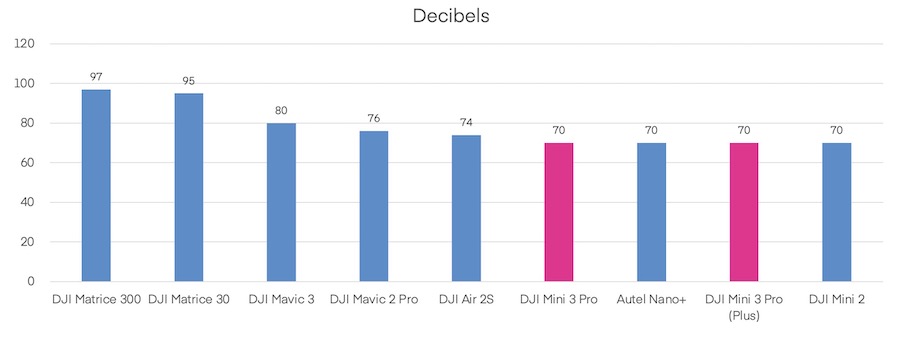
The Mini 3 Pro also sports larger propellers than its predecessor, allowing it to generate a lot more lift, and surprisingly sound a lot quieter. Upon further testing, we found the Mini 3 Pro generates the same 70dB that the Mini 2 and Nano+ generate. The larger propellers generate more lift at lower rotational speeds, hence generating a lower pitch sound, which is more appealing and appears quieter.
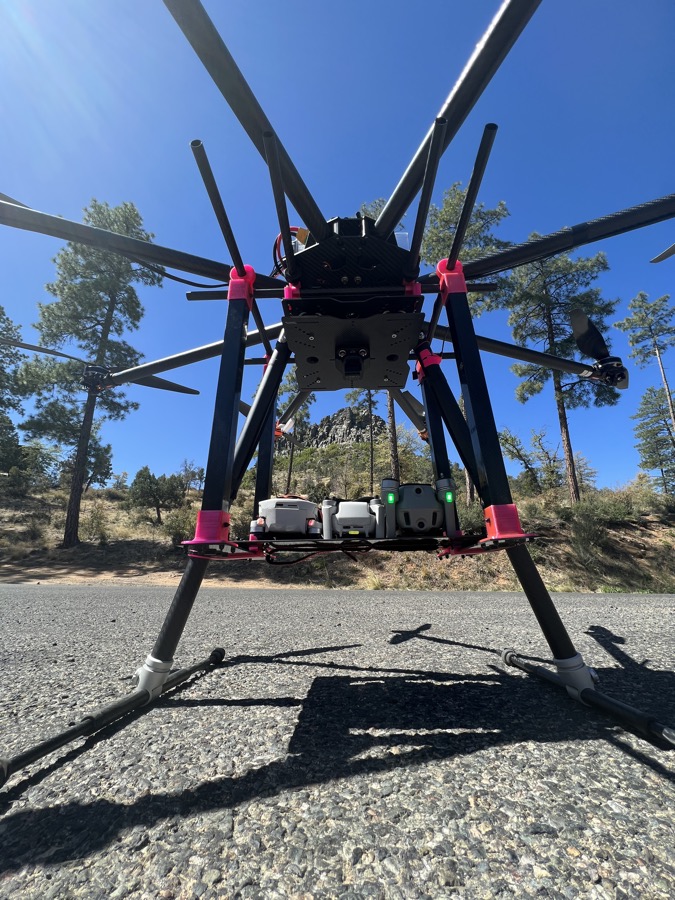
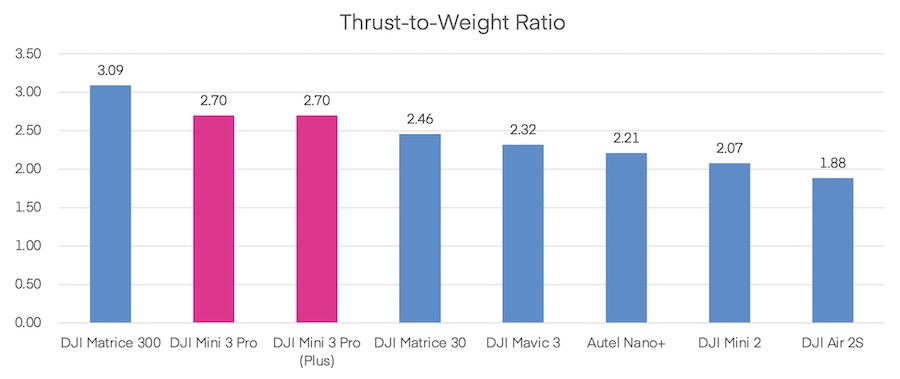
In our standardized thrust test, the Mini 3 Pro was able to lift 420 grams in addition to its own weight, a 2.7:1 thrust-to-weight ratio. In comparison, the Mini 2 could “only” pull 260 grams, a 2.07:1 thrust-to-weight ratio. Of all the drones we have tested to date, this was the 3rd best drone after the DJI Matrice 300 (3.09:1 ratio) and the Autel Lite+ (2.77:1 ratio).
Flight Time
Flight time is important so we tested that too! Fair warning, our office is at 5,000 feet above sea level, and depending on the outside pressure and the temperature, the equivalent altitude can be much more… During this test, our density altitude was 7,700 feet, so keep that in mind when reading these results.
Rather than focusing on a specific flight time, we prefer to look at the percentage of advertised flight time instead. This gives us a better base to compare drones over time.
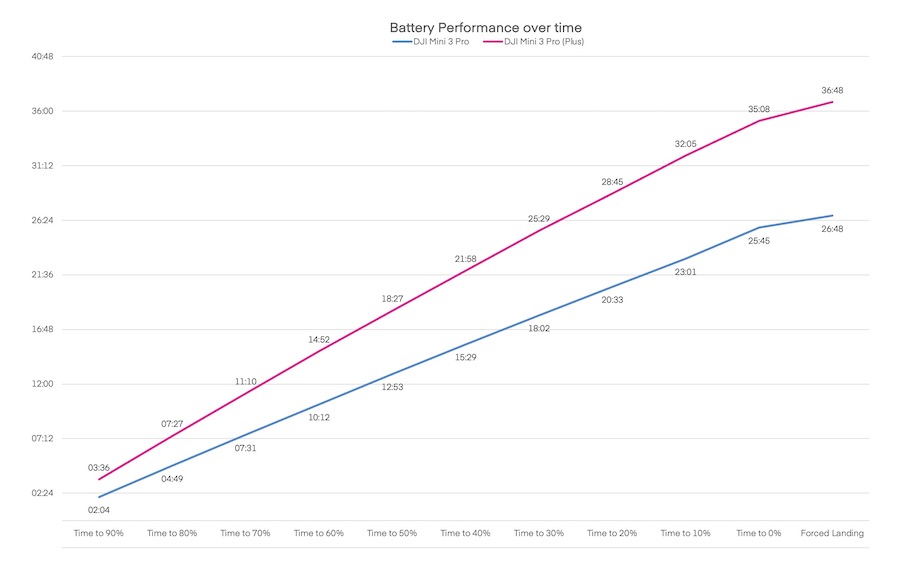
With the normal battery, we were able to reach 87% of the advertised 31 minutes with a total flight time of 26 min 50 sec. 87% was the best percentage we ever accomplished to date with any of the drones we tested.
With the “Plus” battery, we were “only” able to reach 78% of the advertised 47 minutes, with a total flight time of 36 min 48 sec until forced landing. Not terrible, but not great either.
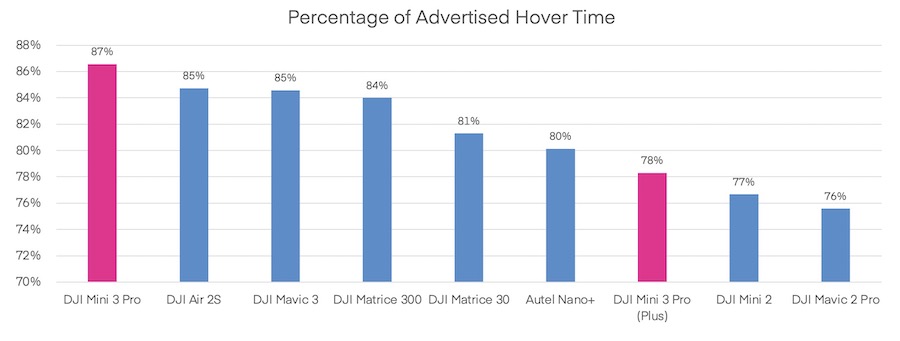
A note about our testing. We test flight drones until forced landing, with the battery at 0% and sometimes several minutes after that. Don’t try this at home or during routine flights. Our tests are also conducted while hovering indoors in a controlled environment, to prevent outside factors such as wind and temperature changes. If advertised, we compare our results to the hovering flight time since forward flying typically yields better flight times. The graph below shows the progression of the flight in 10% of battery increment. The “time to 20%” is probably a realistic time to be in the air before landing.
A New Controller
With the Mini 3 Pro, DJI introduced the new DJI RC. This is the fourth DJI controller with this form factor. It sits between the traditional RCN1 controller and the more expensive RC Pro. It’s also the lightest possible option at the moment:
- DJI RC: 386 grams
- RCN1 with iPhone 13+: 675 grams
- RC Pro: 692 grams
- Original DJI Smart Controller: 714 grams
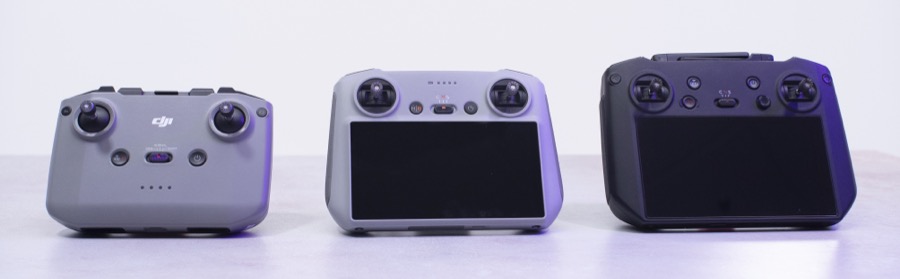
We enjoyed the simplicity of the new DJI RC: no antennas, a simpler way to access the app (simply turn it on!), and the great overall feel of this known form factor. It’s brighter than most cell phones, although not as bright as the RC Pro. It also doesn’t overheat, and it’s very quick to set up compared to plugging in a phone. Pinchers will enjoy this form factor, we certainly do.
On the downside, you can’t install third-party apps so if you’re looking to run Litchi or mapping software, this won’t work for you. There’s also no HDMI out so if this is something you need, you might need to look elsewhere. Just like the RC Pro and Smart Controller, you can record internally with the swipe of a finger and connect it to a mobile hotspot or local Wifi.
The O3 connectivity will give you a crisp image from the drone camera with 1080p at 30 fps using 2.4 and 5.8GHz frequency automatically. With 12km (over 7 miles), you’ll have plenty of performance to keep your drone within visual line-of-sight.
A new 48MP 1/1.3” sensor
To us, the biggest upgrade with this drone comes from the camera. 1/1.3” (0.77”) is a sensor size we have never seen before with DJI. Larger than the 1/2.3” sensor (0.4”) from its older brother, but smaller than the 1” sensor from the Air 2S, it is much brighter with an aperture of 1.7.
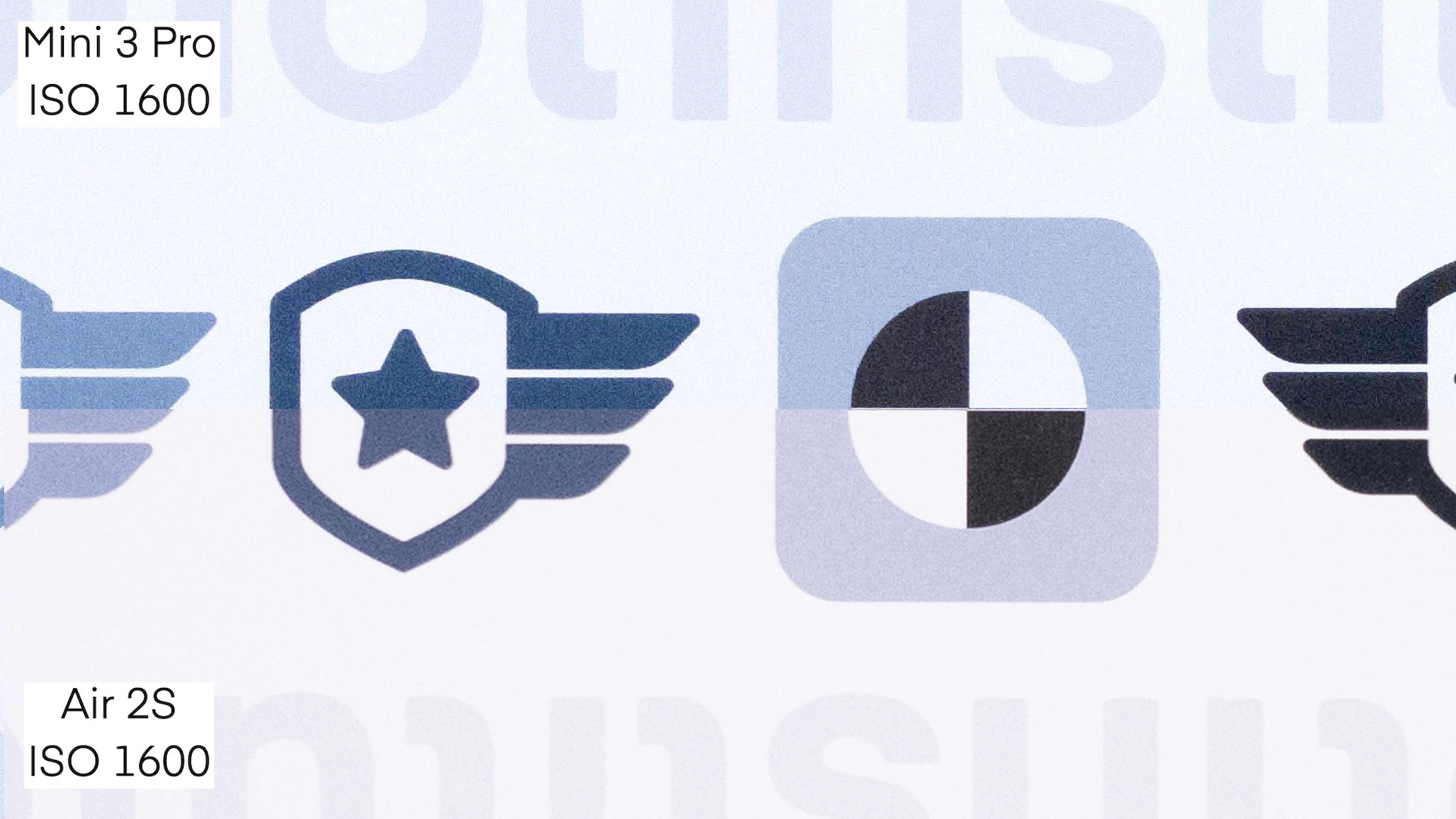
DJI also introduced a dual native ISO of 100 and 1600. This is the first time we are seeing this technology in a consumer or prosumer-level drone. Our testing showed that colors became a tad bluer when switching to 1600. You can see for yourself by downloading the full-size test images below. It became more difficult at ISO 1600 and above to keep the edges of the sensor properly exposed, generating some vignetting in the corners.
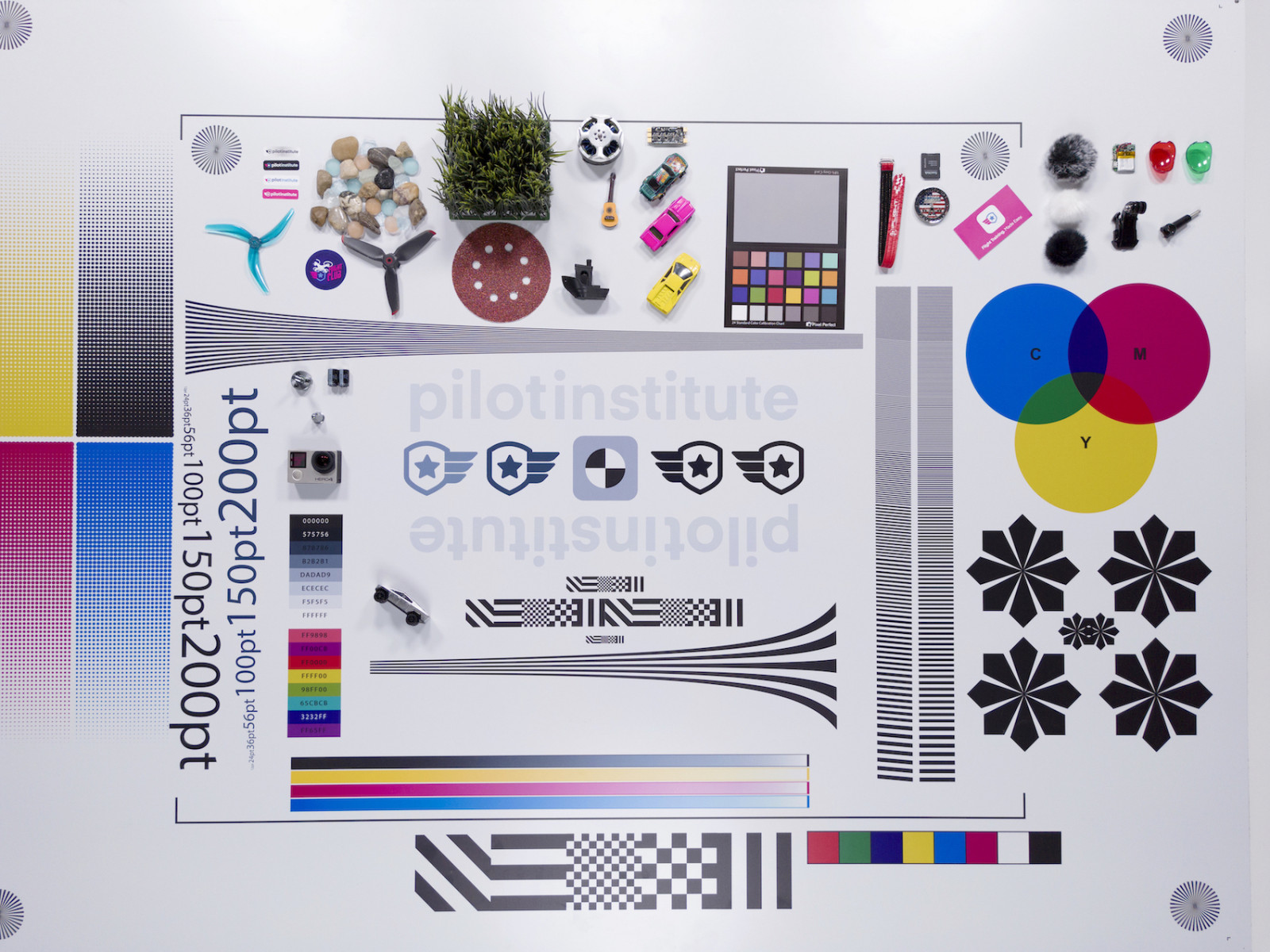
Download the full resolution images here.
Old DJI cameras could tilt up to 20 degrees. The Mini 3 Pro camera can now tilt all the way to 60 degrees up (and 90 degrees down, as usual). This will allow you to “look up” at tall buildings, bridges, mountains, or whatever else is up there!
Vertical Mode for YouTubers only?
Combine the new degrees of freedom with the new vertical (portrait) mode, there aren’t many scenes this little drone can’t capture. Don’t be fooled, the vertical mode is more than just cropping a horizontal image. The camera physically rotates 90 degrees to increase your vertical field of view.
These two images were taken from the same exact location, but the vertical image clearly captured a wider field of view.
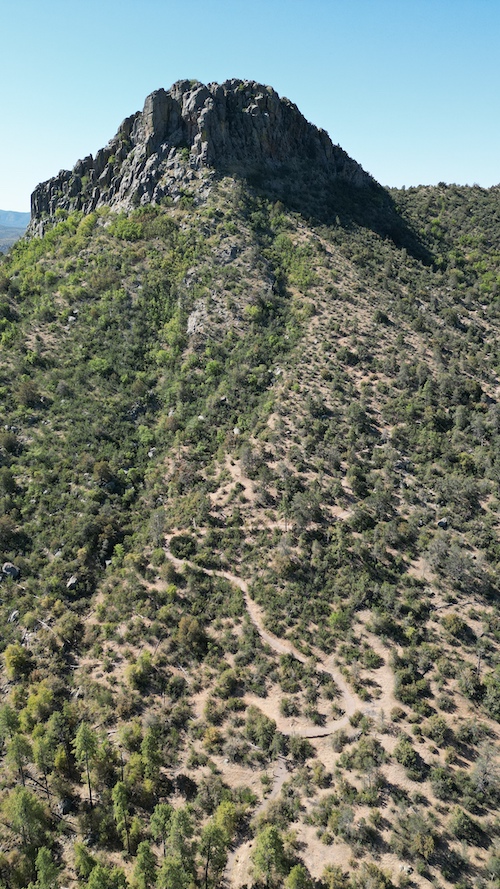

This mode is also great for social media creators who are looking for 9:16-ratio footage that’s ready to be published.
Photography Modes
The Mini 3 Pro will take 12MP and 48MP photos, both with access to full Manual settings. You can also do the traditional auto-exposure bracketing (AEB) with 3 to 7 images, panorama shots (sphere, vertical, and wide angle), and record images in either JPEG or JPEG+RAW (DNG).
Camera Test and Samples
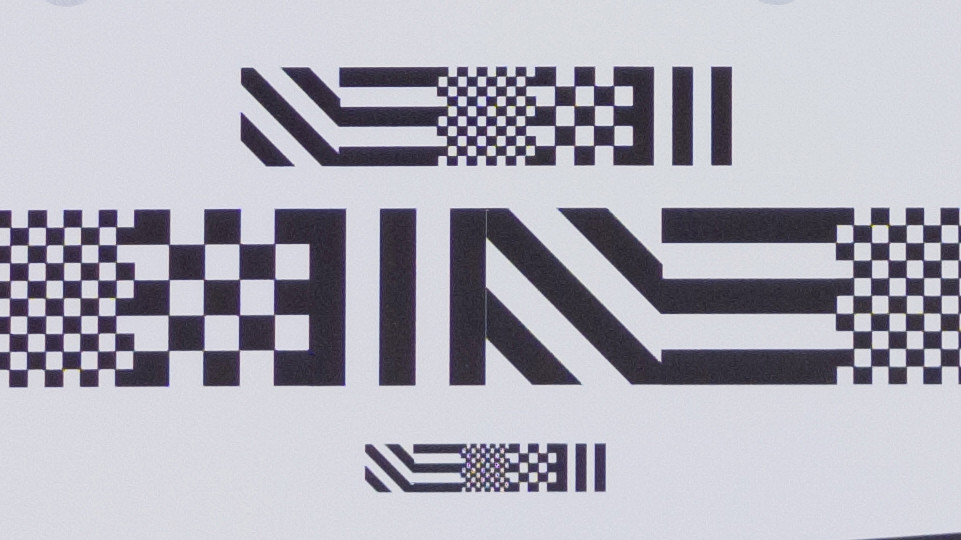
Testing drones “in the wild” is difficult. A totally uncontrollable environment with different lighting, and different shadows. This is why we decided to use a testing chart in our studio instead. With this method, we are able to control the uncontrollable and get comparative footage. All images below were captured in manual mode, at 48MP, at 5600K white balance without ND filters, in RAW files converted to JPEG in Photoshop. The sample images shown are close-ups of our testing chart.
The Mini 3 Pro performed well at all ISO, considering the size of the sensor. ISO 1600 (the highest native ISO) is the highest we recommend using with this drone. The only image problem we noticed was in the “bar code” section of our chart, where purple colors appear in a very small section at the bottom (as seen in images 1 through 8).
Our chart contains several “torture test” areas, including very close-together lines (images 15 through 21 below) that most sensors aren’t able to detect. The Mini 3 Pro showed impressive details in those areas, even beating far more expensive drones.